
Watt · News
GTA VI: next stop Vice City, foot to the floor
Out Thursday 19 November. More than 200 cars spotted, and one question: will there be chargers in Vice City?
Read the article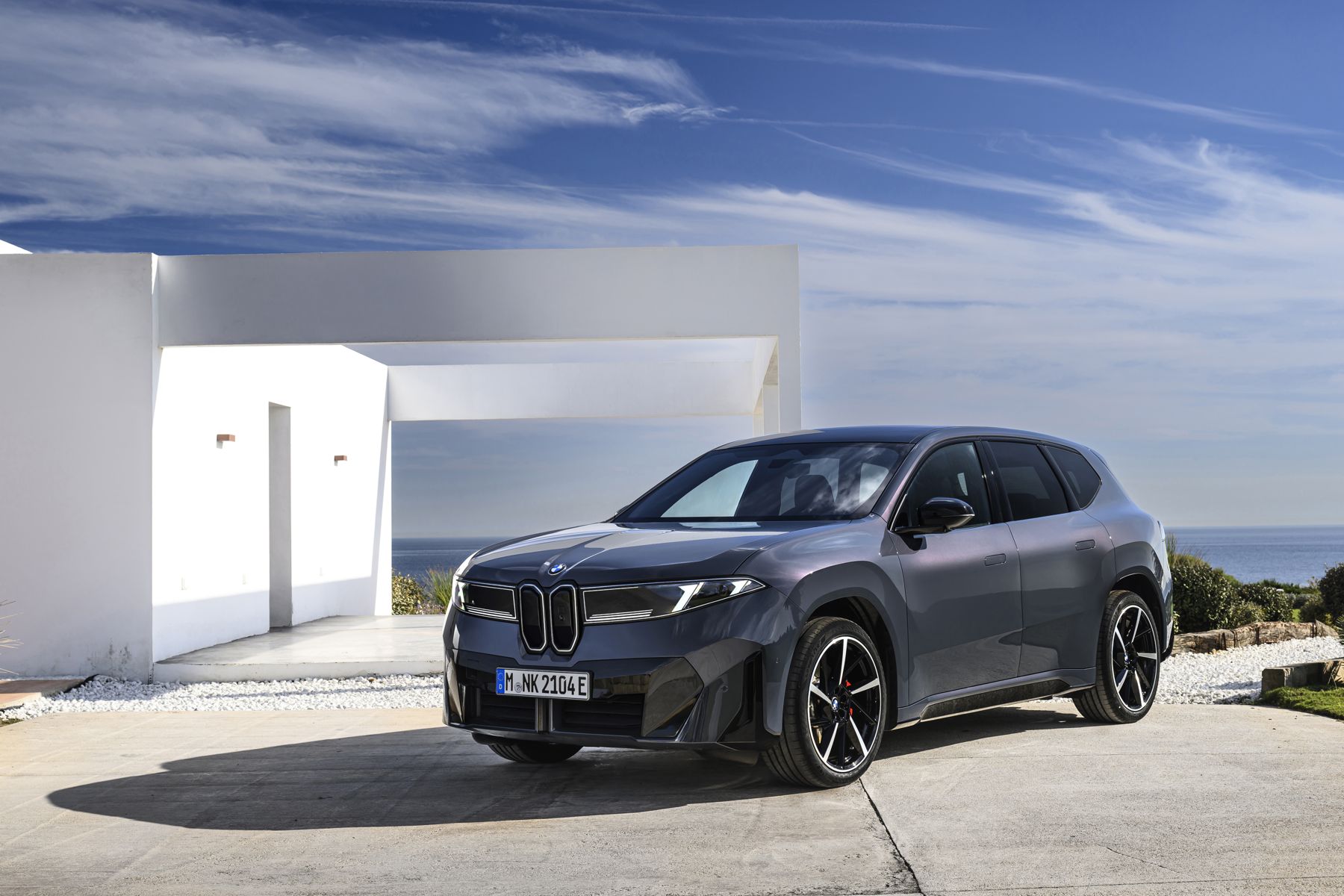
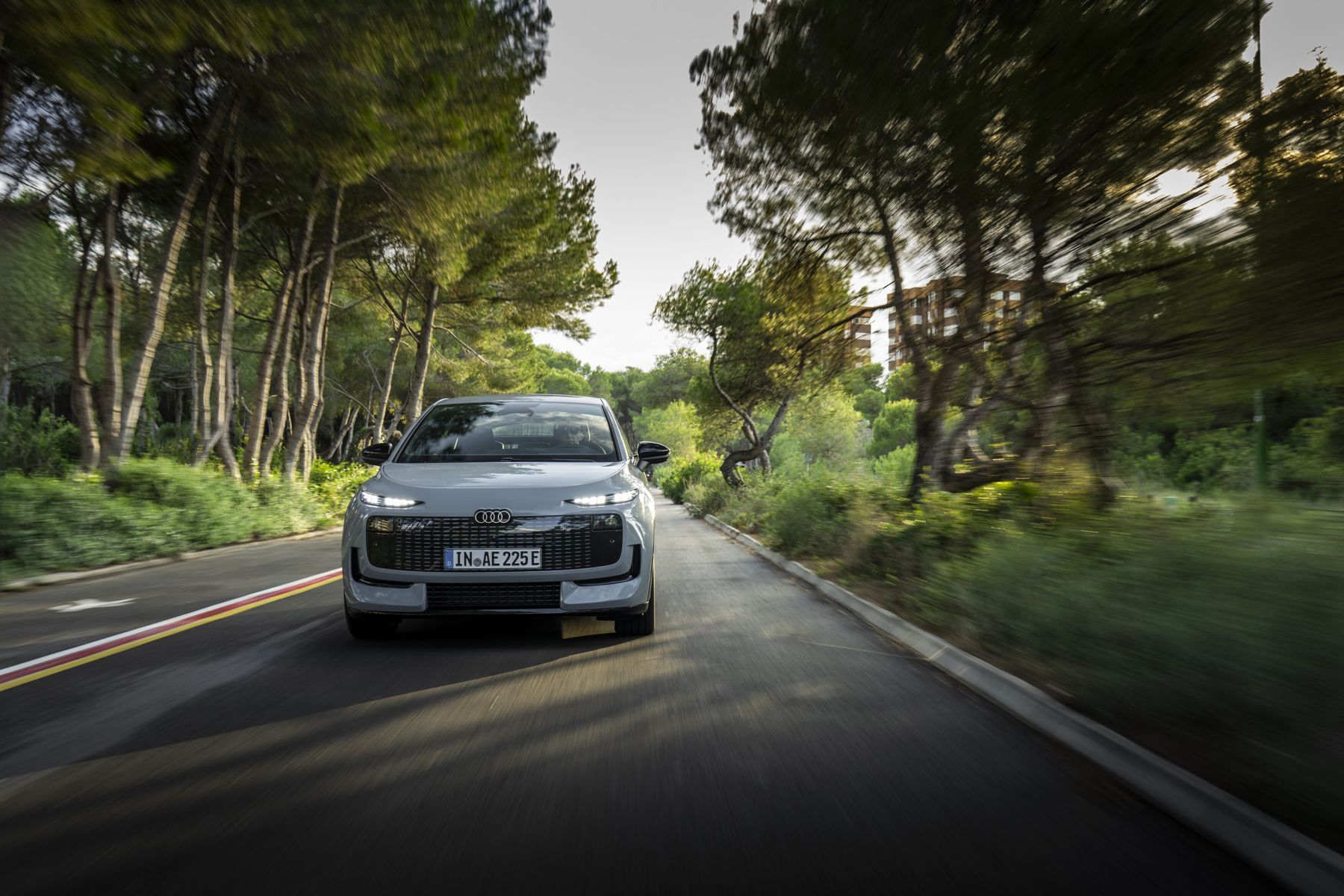

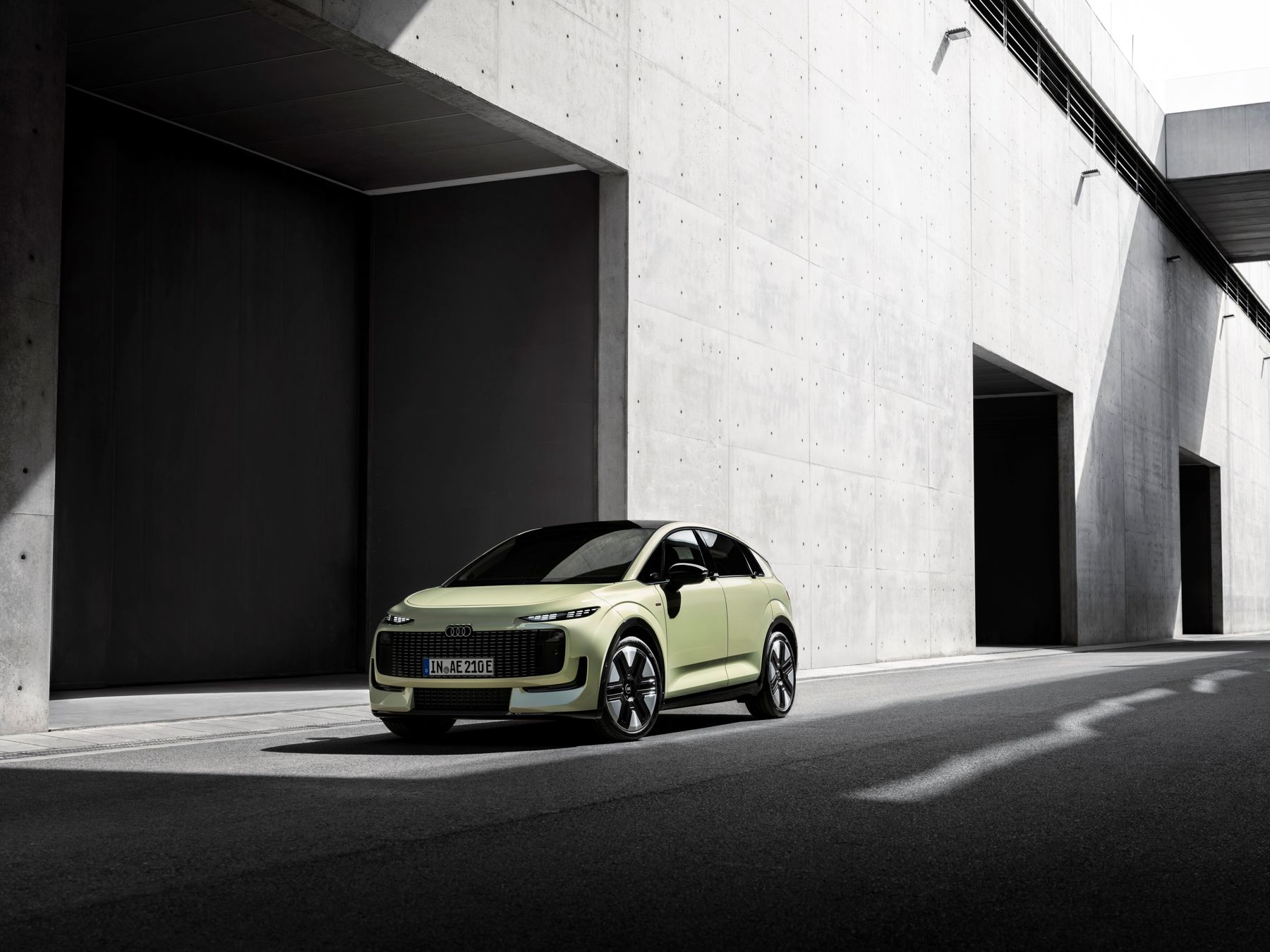
Gone since 2005, the A2 is back, this time fully electric. And it is shaping up to be the most frugal Audi ever built.
Unveiled in Paris in early September, then the star of Audi's stand at the Paris Motor Show, the new A2 starts at €38,600. It borrows the technical base of the Volkswagen ID.3 Neo, but takes aerodynamics further than anyone: with a drag coefficient of 0.24, it slips through the air better than any other compact in the range.
The result: up to 646 km of range with the big battery, and official consumption as low as 12.8 kWh/100 km. In a nod to its ancestor, the rear window is split by a small spoiler. Inside, there is a large curved display and magnetic mounts for clipping on accessories. First deliveries are due in December, from Ingolstadt.
Everything is designed to cut through the air: an active shutter behind the bumper that only opens when the drivetrain needs cooling, a fully faired underbody, flush door handles and wheels shaped in the wind tunnel. The most efficient version gets by on about 12.8 kWh per 100 km on the official cycle. In real life, that promises motorway trips with fewer stops than most rivals.
The range opens with 170 hp and a battery of about 52 kWh, good for more than 420 km. A 190 hp mid-range version passes 500 km. At the top sits an 84 kWh battery: 231 hp and up to 646 km, or 326 hp for those in a hurry, with 0 to 100 km/h in under 6 seconds. The big-battery versions accept up to 183 kW on a fast charger; the others top out around 100 kW.
A single curved panel brings together a driver display of almost 12 inches and a central screen of almost 13 inches, angled towards the driver. Audi's voice assistant uses artificial intelligence, and a route planner schedules the charging stops. A handy touch: magnetic mounts in the cabin and the boot hold dedicated accessories. The 396-litre boot grows to more than 1,300 litres with the rear seat folded, and the big versions add a small storage space under the bonnet.
Audi delivers a coherent compact: pricier than its Volkswagen cousin, but better finished and even more frugal. The entry price is tempting, but the versions that really appeal quickly pass €45,000. Deliveries start in December: we will see in spring whether the efficiency promise holds up on the road.
More photos
This Thursday, millions of players will take the wheel at the same moment. And for once, car lovers have as much reason to be excited as gamers.
We thought it would never arrive. Delayed twice, first from 2025 to spring 2026, then to the autumn, the sixth instalment finally lands on 19 November on PlayStation 5 and Xbox Series. A friendly tip: make room on your console, the game needs more than 200 GB. PC players will have to wait a little longer.
The story takes place in Leonida, an imaginary state that looks remarkably like Florida. At its heart is Vice City, Miami's sunny double. Seafront, six-lane highways, alligator swamps: a playground made for convertible cruises.
In GTA, the real star is often the car. Fans have already counted more than 200 different models by combing through the trailers frame by frame. True to tradition, Rockstar uses no real brands: each car blends several existing models, close enough that you recognise a German sports car or a luxury saloon, different enough not to upset any manufacturer. Real design work.
Little extras that make a difference: you will be able to hitch a trailer or a boat, race an airboat through the swamps and even paddle a kayak.
That is the question on our minds. The previous game already slipped in a few silent electric sports cars, a pointed nod to a famous Californian brand. For Vice City, it is a mystery: the trailers mostly feature roaring V8s. Will charging points have a place in Leonida? See you on Thursday.
More photos
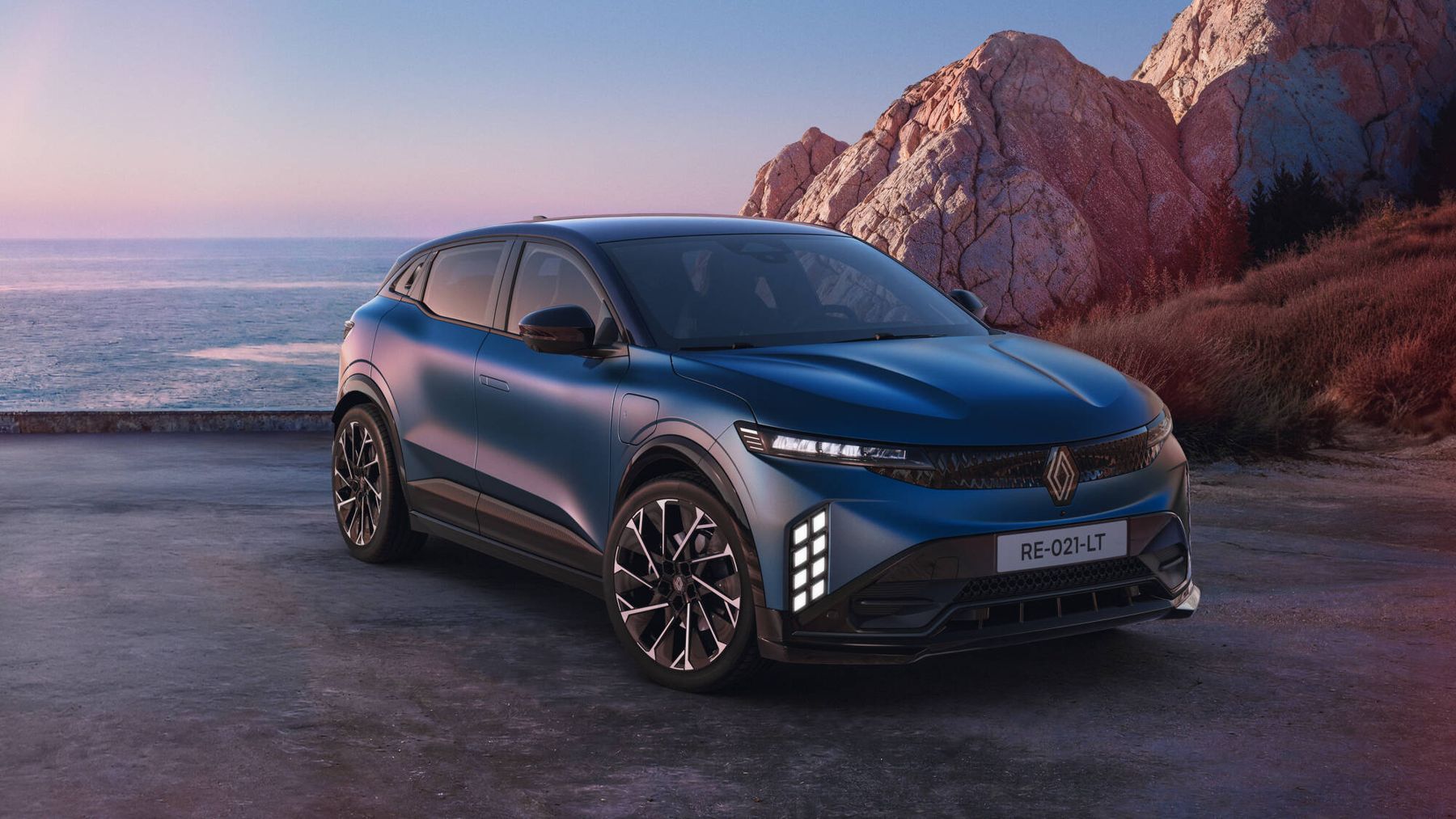
It does not happen often: Renault's electric compact gains range and charging speed… while getting cheaper.
For its mid-life update, the Mégane swaps its 60 kWh battery for a 67 kWh LFP pack, a chemistry free of cobalt and nickel. Range passes the symbolic 500 km mark, and fast charging rises to 165 kW. The reworked front end looks more muscular.
The good surprise is the price: €37,500 in Techno trim, €2,000 less than before. The screen with Google services remains standard, as does the heat pump. And the car can now give its energy back, to an appliance or to the power grid.
Renault drops its nickel-manganese-cobalt battery for lithium-iron-phosphate chemistry: cheaper, more robust over time and free of sensitive metals. Capacity rises to 67 kWh and official range to 501 km, up from 468. Because the pack is assembled in Europe, it also unlocks a small extra bonus under French incentives.
This was the Mégane's weak point. Peak power on a fast charger rises from 130 to 165 kW, and it now takes just under half an hour to go from 15 to 80%. At home, the 11 kW charger is standard and a 22 kW unit is optional; both can give energy back, to power an appliance or even support the grid.
The Techno trim already includes adaptive cruise control, a rear camera, dual-zone climate control, wireless phone charging, a keyless card and a heated steering wheel. Esprit Alpine adds 20-inch wheels, heated power seats, a Harman Kardon sound system and a 360° camera. The heat pump and one-pedal driving are standard across the range.
More range, faster charging and a lower price: the Mégane fixes its flaws without losing its excellent infotainment system. It still lacks a big-battery version to match the 600 km of some rivals.
More photos
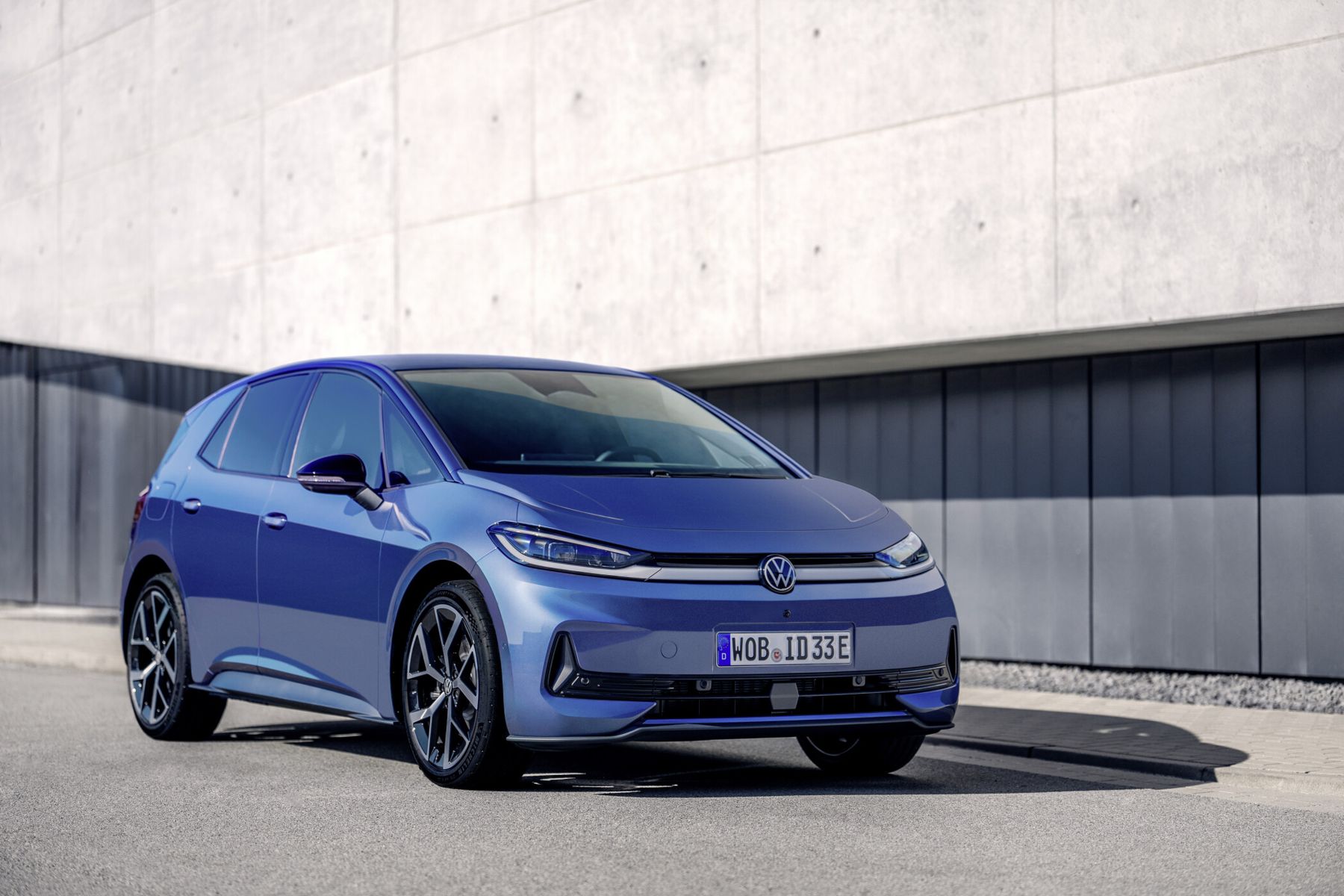
A new name, new motors and, at last, real buttons: the ID.3 fixes the flaws it has been criticised for since launch.
Renamed ID.3 Neo, Volkswagen's electric compact gets a more efficient motor and three battery sizes. The largest comes close to 630 km of range, a record for the model. The two smaller ones switch to LFP chemistry, known for being robust and cheaper.
Inside, the dashboard is covered in soft materials, the steering wheel gets physical buttons back, and every window has its own switch. The 12.9-inch central screen becomes standard, and the car can now power an e-bike or camping gear. Starting price: €34,990.
The entry model pairs 170 hp with a 50 kWh battery for about 417 km. The 190 hp, 58 kWh version passes 490 km, and the big 79 kWh battery, paired with 231 hp, comes close to 630 km. The new rear motor uses less energy than the old one, which explains much of the range gain.
The two smaller batteries top out at 105 kW on a fast charger: allow about 25 minutes from 10 to 80%. The big battery reaches 183 kW, but a session takes a little longer given how much there is to fill. A welcome new feature: battery health is shown in real time on the trip computer.
The ID.3 Neo starts at €34,990. But for the long-range version you now need at least €45,900, almost €3,000 more than before. Volkswagen France applies a dealer discount that makes most versions eligible for the purchase incentive.
This is finally the ID.3 we were waiting for: better finished, more practical day to day and very long-legged with the big battery. What remains is an average 385-litre boot and rear drum brakes that feel a little dated on a car at this price.
More photos
The first model of a new generation, BMW's electric SUV claims more than 800 km of range.
The new iX3 launches the Neue Klasse platform, which will underpin some forty BMW models by 2027. On the menu: a claimed 805 km of range, charging at up to 400 kW and a display that runs the full width of the windscreen.
It is built in Hungary, in a plant that runs without fossil fuels. Starting price: €71,950.
The iX3 is the first Neue Klasse model, an all-new platform that will spread to some forty BMWs by 2027. An 800-volt architecture, four powerful computers sharing the work, a new generation of battery: it is a complete reset.
With a battery of almost 109 kWh and two motors totalling 469 hp, the iX3 50 xDrive claims up to 805 km. On a very powerful charger, ten minutes are enough to add more than 350 km. Real-world measurements hover around 17 to 20 kWh per 100 km in mixed driving, or 550 to 650 km of range.
The traditional instrument cluster disappears in favour of a light strip running the full width of the windscreen. It is complemented by a 3D head-up display and a large central screen. On the practical side, the 520-litre boot is backed up by a 58-litre front storage compartment.
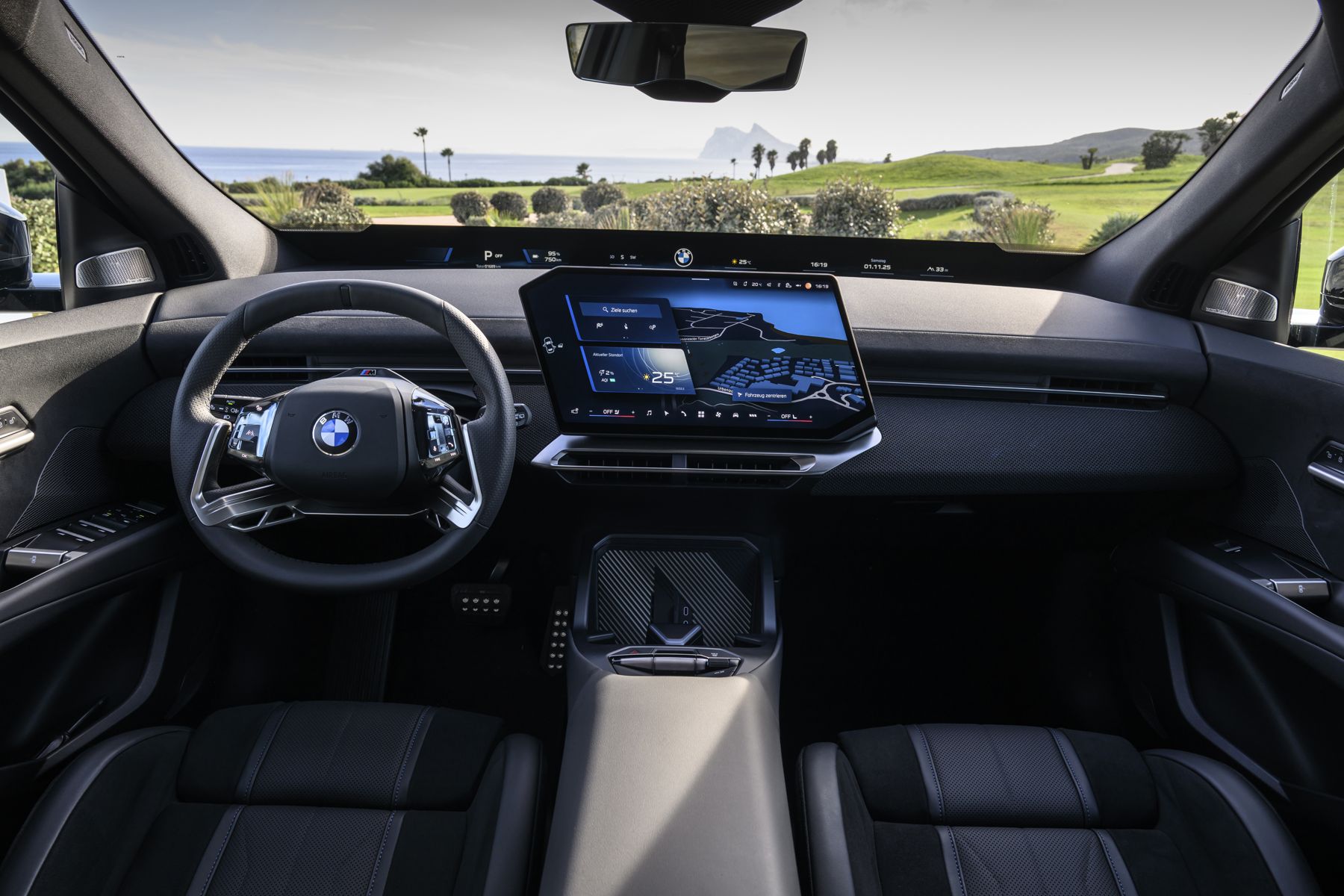 On board · our full analysisBMW iX3 on board: consumption, driving, materials, spaceRead the analysis ›
The symbolic milestone was passed this summer. Good news. Except that behind the scenes, the machine is slowing down.
This year, about a quarter fewer chargers were installed than over the same period in 2025. At this pace, the government's target for 2030, doubling the network, looks more and more like wishful thinking. Another stone in the shoe: about one charger in ten is out of order at any given time.
For drivers, the picture remains fairly reassuring: you can almost always find a plug. The real challenge for the coming years will be keeping them in working order.
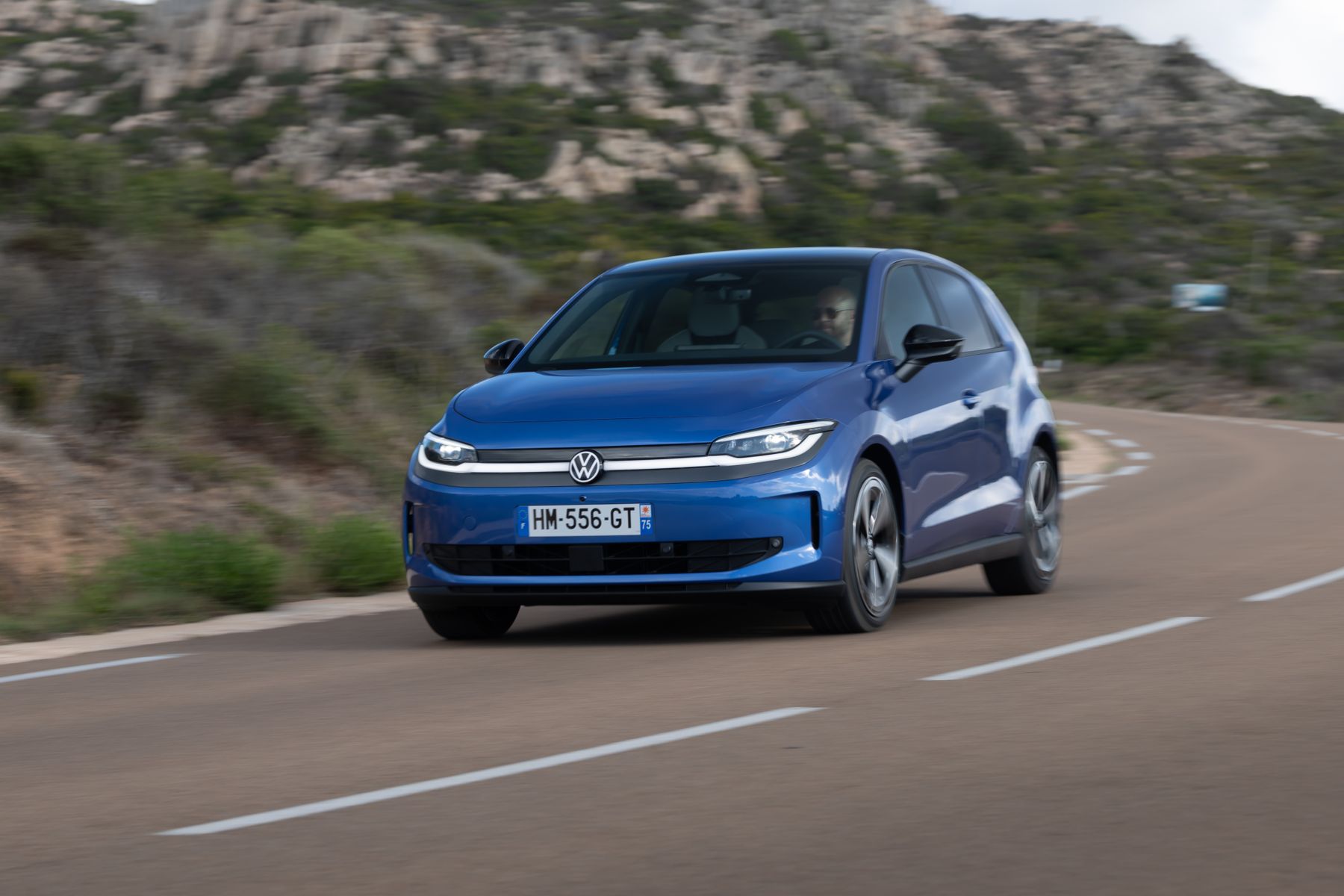
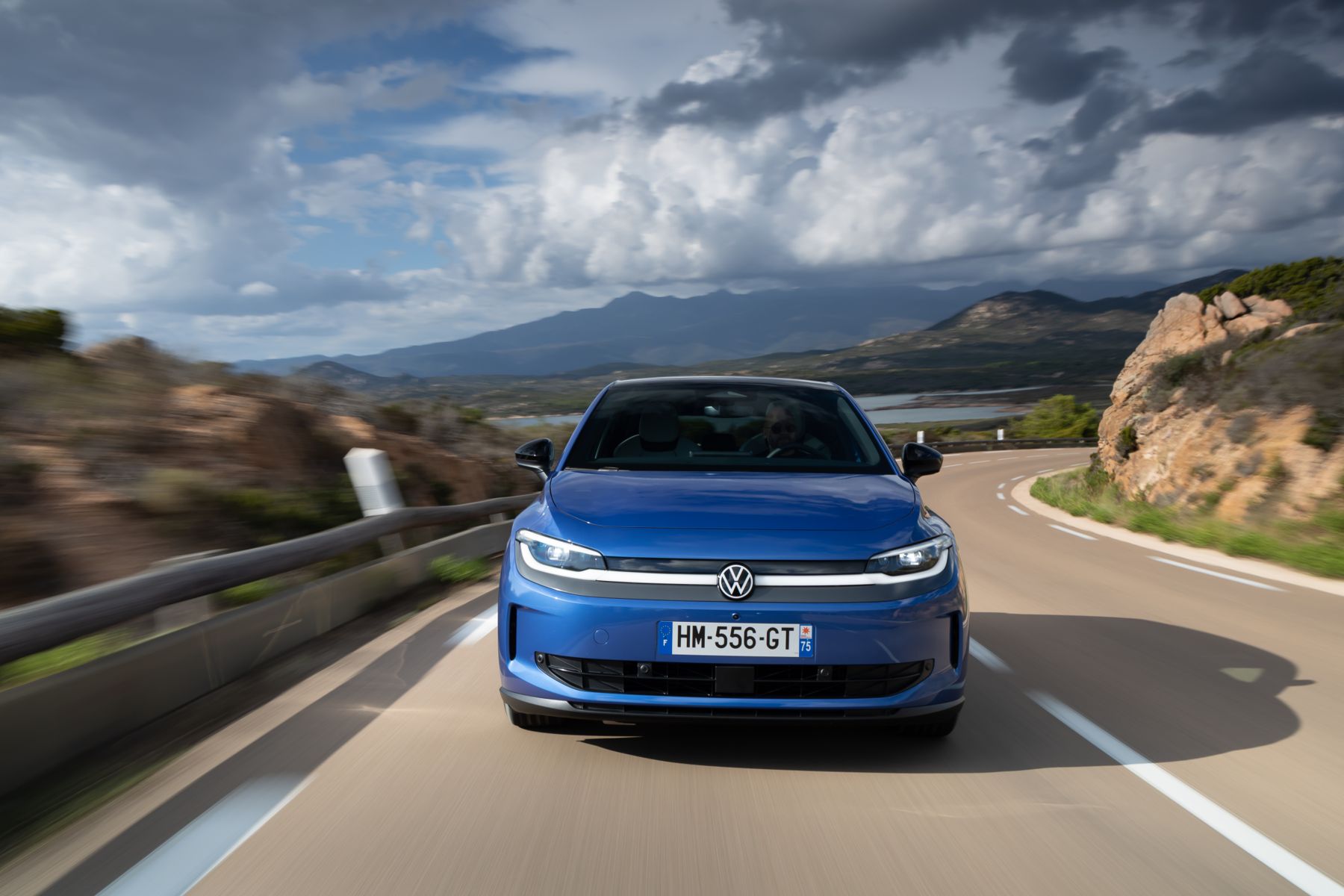
Volkswagen takes on affordable small EVs with its most popular name after the Golf.
Priced at €24,995, exactly the price of a Renault 5, the ID. Polo is built in Spain. It promises up to 450 km of range and a bigger boot than a Golf.
For those who want thrills, a 226 hp ID. Polo GTI follows this autumn, fifty years after the very first GTI.
The entry version has an LFP battery of about 37 kWh, good for a little over 300 km: perfect for town and the suburbs. The 52 kWh battery aims for 450 km and accepts up to 105 kW on a fast charger. Power ranges from 116 to 211 hp, and the strongest version does 0 to 100 km/h in just over 7 seconds.
Volkswagen has listened to the criticism: real buttons are back on the steering wheel, there is one switch per window, and softer materials cover the dashboard. The driver display can mimic the dials of an old-school Golf. The fabrics are made from recycled plastic, some of it recovered from the sea.
To celebrate half a century of the first Golf GTI, Volkswagen is launching a 226 hp ID. Polo GTI. It keeps the codes: red stripes, sports seats, a firmer chassis and 0 to 100 km/h in 6.8 seconds.
 On board · our full analysisID. Polo on board: consumption, driving, materials, spaceRead the analysis ›
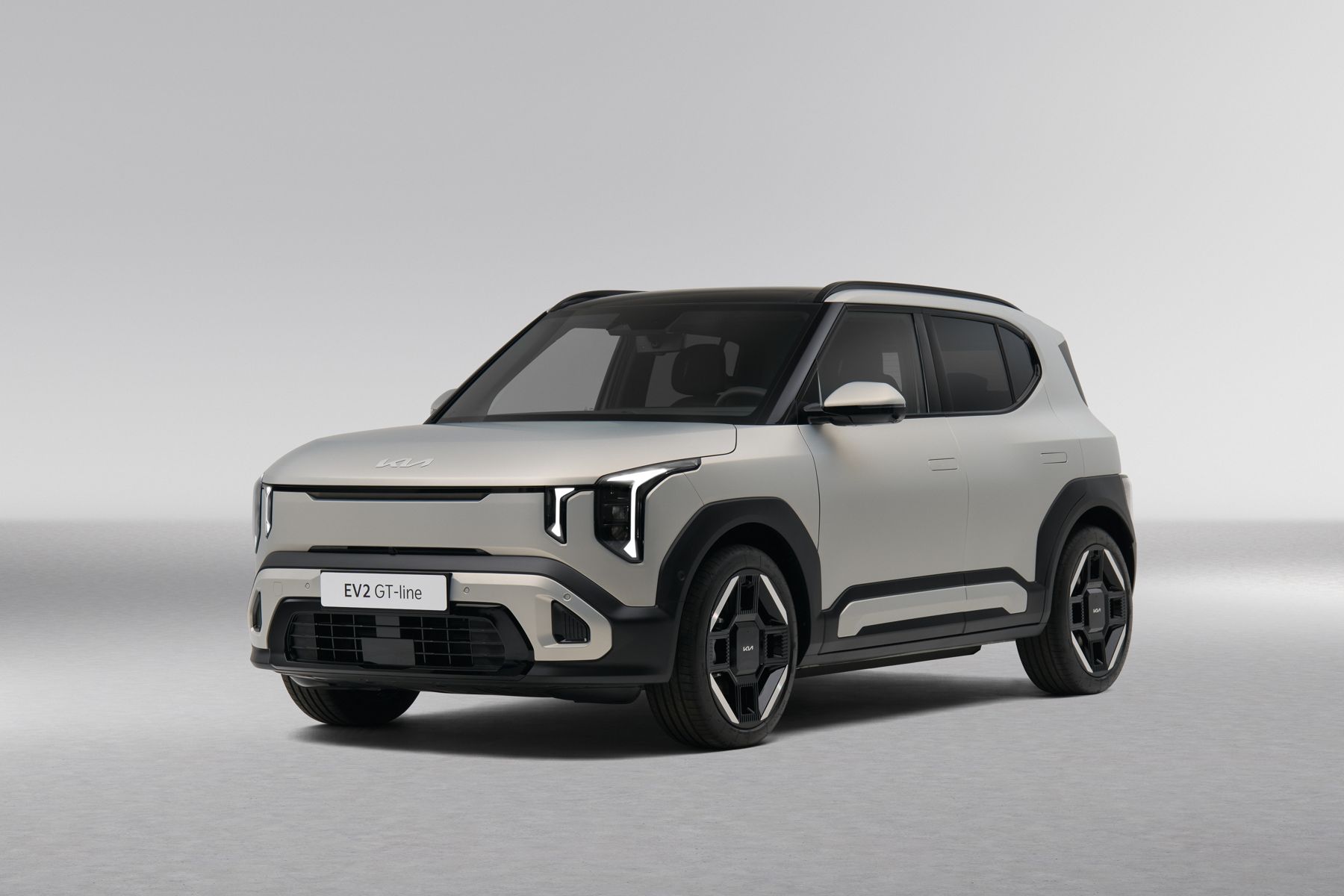
Built in Slovakia, battery included, Kia's smallest electric SUV qualifies for the most generous incentives.
Priced from €26,670, the EV2 can drop below €20,000 once incentives are deducted, depending on household income. Two batteries to choose from, up to 453 km of range, and driver aids worthy of a much more expensive car.
Kia is aiming for 10,000 sales a year in France for this four-metre model.
Because it is assembled in Europe along with its battery, the EV2 ticks every box for French incentives. Depending on household income, its price can fall below €20,000, a rarity for an electric SUV of this size.
The small 42 kWh battery, paired with 147 hp, is rated at 317 km. The larger 61 kWh pack reaches 453 km with a 135 hp motor. Charging from 10 to 80% takes about 30 minutes on a fast charger.
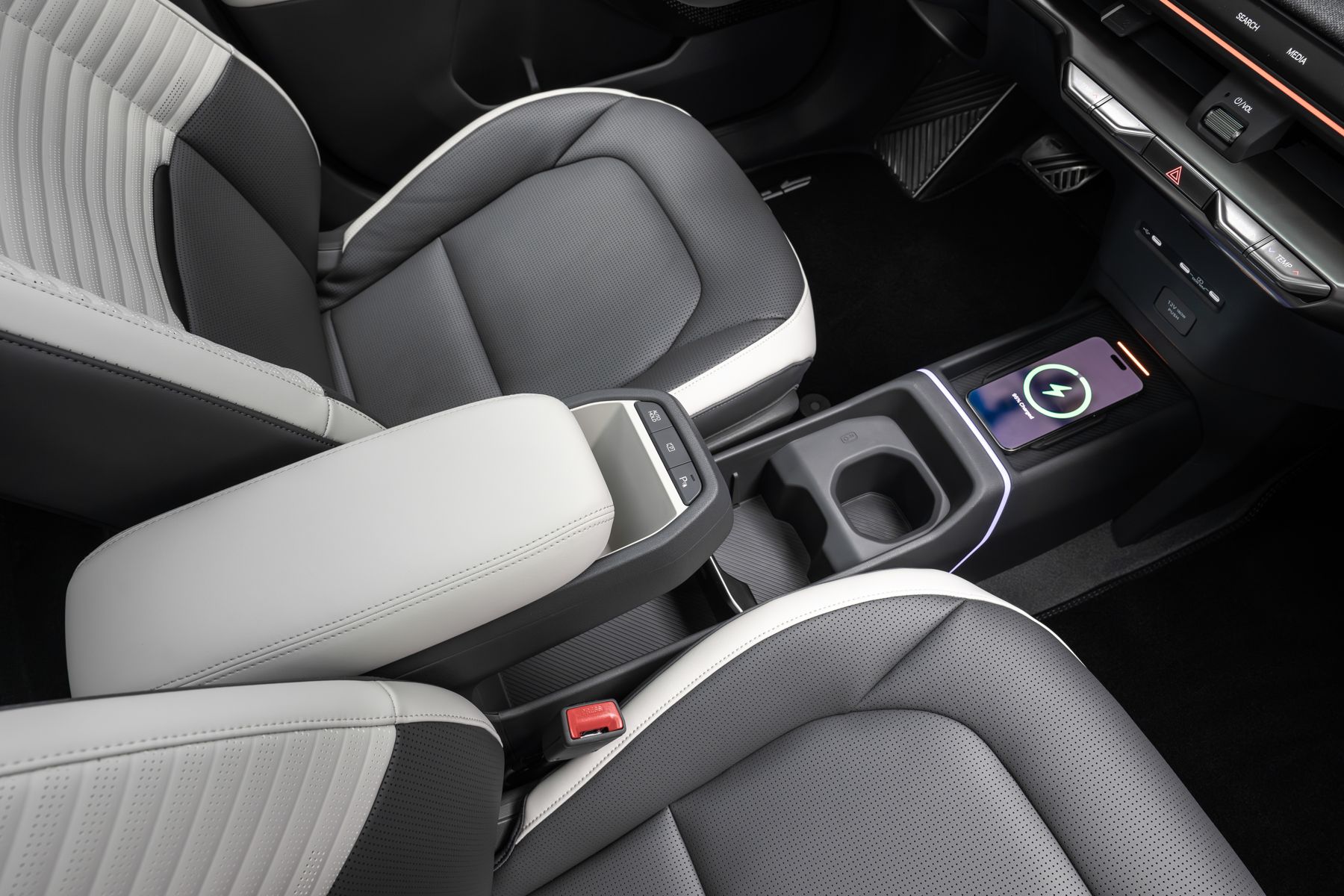
A four-seat version offers two rear seats that slide and recline independently, so you can favour legroom or luggage. A small front boot holds the cables, and the car can power an electrical appliance when camping.
 On board · our full analysisKia EV2 on board: consumption, driving, materials, spaceRead the analysis ›
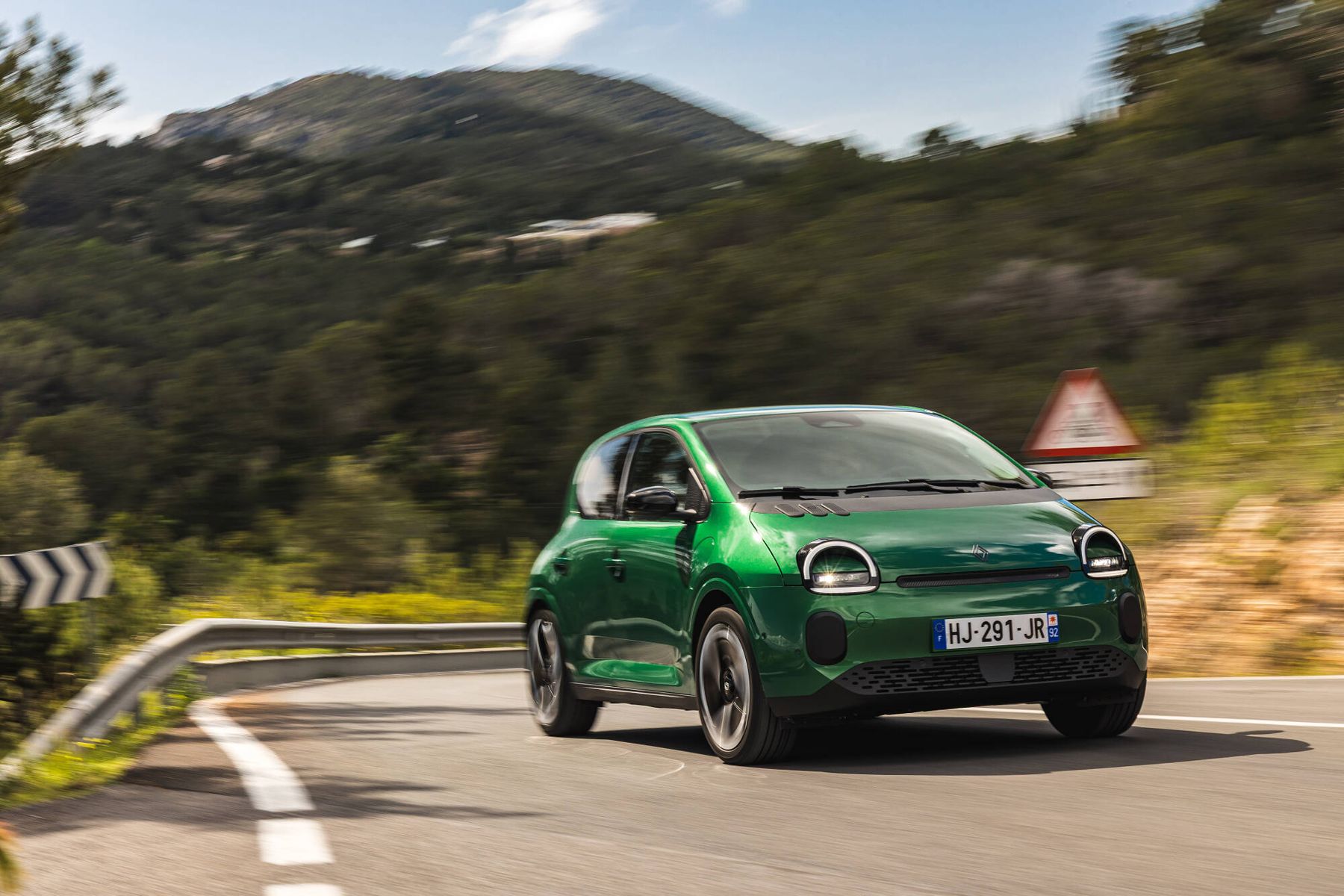
Renault's little car is back with a retro face and a price that hits the mark.
€19,490 before incentives, and around €15,000 for households that receive the maximum bonus: the Twingo becomes one of the cheapest new electric cars on the market. Developed in under two years, it is built in Slovenia.
Its 27.5 kWh battery is clearly aimed at town driving, with 263 km of range. Note that fast charging is an option.
Round headlights, a smiling face, flared wings: the new Twingo openly winks at the first generation of 1993. It is 3.79 m long, keeps five doors and a sliding rear bench that takes the boot up to 360 litres.
With 82 hp and a 27.5 kWh battery, the Twingo is not after performance but frugality: around 12 kWh per 100 km, one of the lowest figures on the market. A turning circle under 10 metres makes it a parking champion. On the motorway, however, the range drops quickly.
Fast charging is not standard. Without the optional pack of about €500, you cannot plug into a motorway charger. With it, getting back to 80% takes just under half an hour.
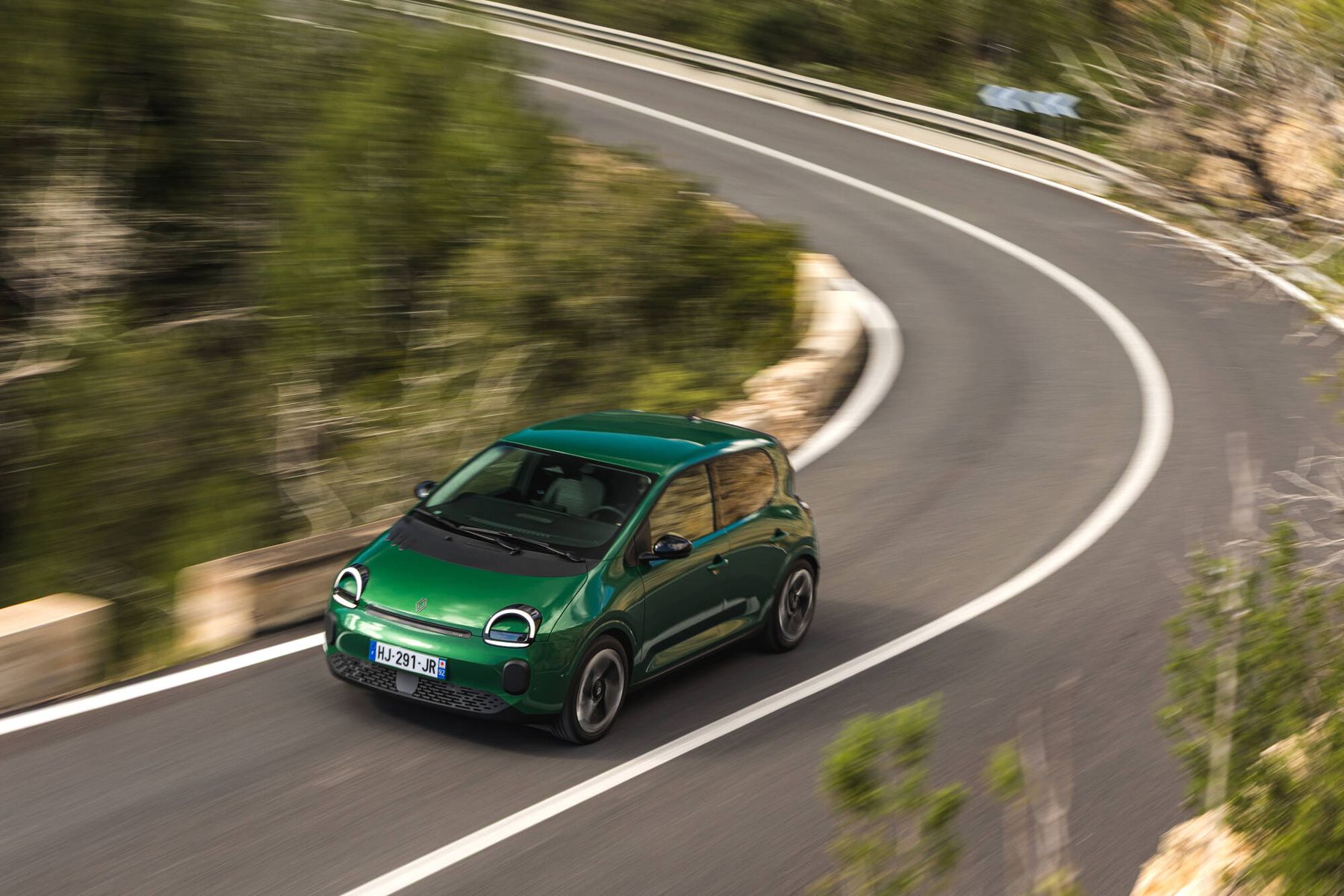 On board · our full analysisRenault Twingo E-Tech electric on board: consumption, driving, materials, spaceRead the analysis ›

In France, 41% of new cars sold in October were electric. A record we are proud of… until we look north.
In Norway, electric cars now account for almost all new car sales. Denmark is at around four in five. Their secret is no secret: years of very generous tax breaks and a charging network built very early. France, for its part, is catching up fast: the electric share has almost doubled in two years.
In August 2026, electric became the most registered powertrain in France over a month for the first time, ahead of hybrids.
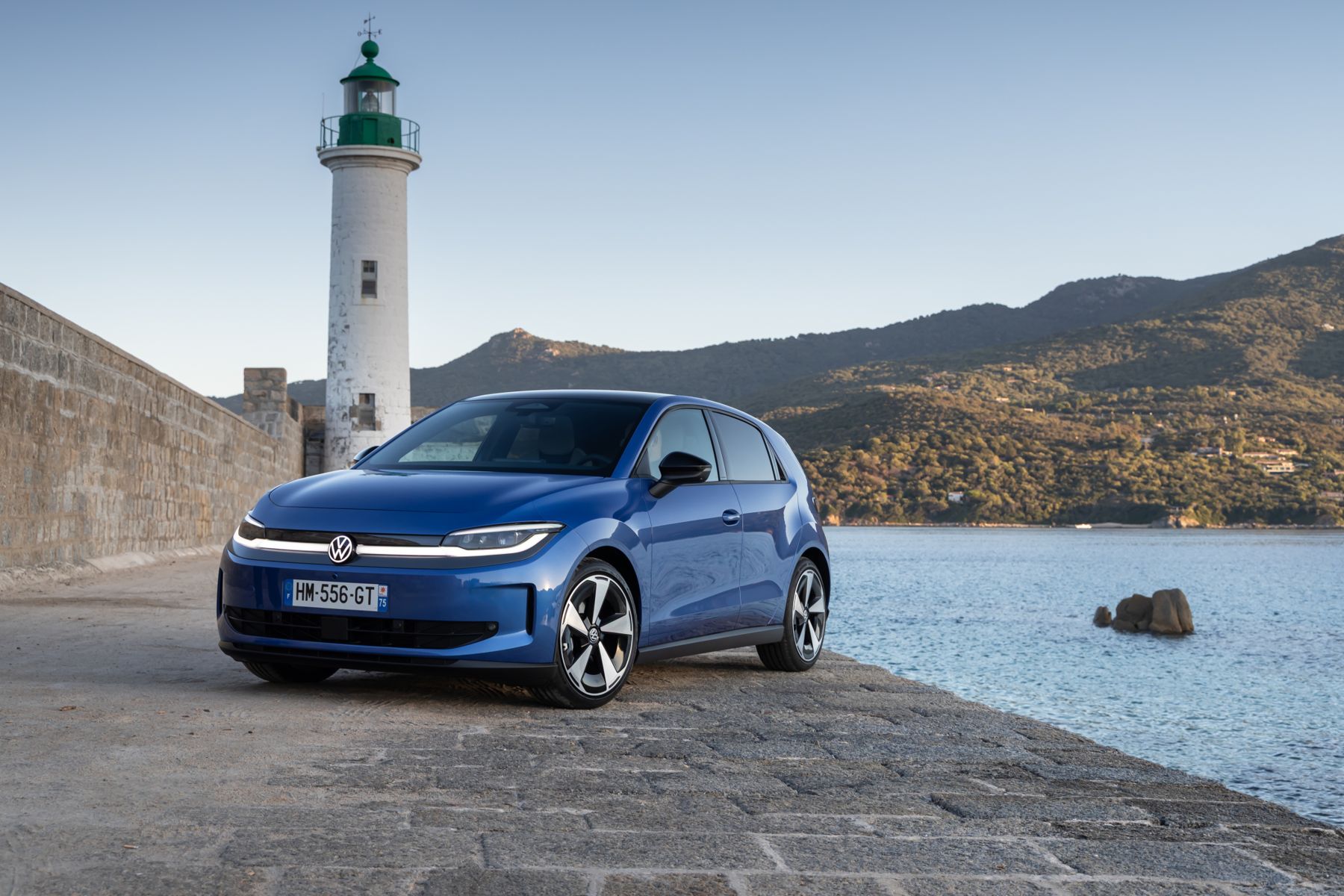
Volkswagen's best-known name after the Golf goes electric. And it takes on the Renault 5, price included, with real technology on board.
The message is crystal clear: €24,995, exactly the price of the R5. Volkswagen did not want to leave affordable small EVs to the French. It has been built near Barcelona since the summer.
The first front-wheel-drive ID., the ID. Polo aims to reassure. The 211 hp version does 0 to 100 km/h in 7.1 seconds, a small hot hatch time, and top speed is limited to 160 km/h. The entry versions, from 116 to 135 hp, need 9.5 seconds or a little more, plenty for everyday use. Expect a more settled ride than the average city car, with a long wheelbase that steadies the whole car.
Volkswagen claims 13.3 to 13.8 kWh/100 km with the 52 kWh battery. On varied roads, early measurements hover around 13.5 kWh, close to 400 km of real range. At 120 km/h, count on about 16 kWh/100 km: range then drops to around 300 km, still respectable for a city car.
Volkswagen has learned from its first EVs, criticised for their temperamental touch controls. The steering wheel gets real buttons back, and so do the climate controls and hazard lights. In front of the driver, a 10-inch screen can mimic the dials of an old Golf. In the centre, a large 13-inch display, the size of a tablet. The smartphone connects wirelessly, and the phone can replace the key as an option.
From the base version, the essentials are there: lane keeping and a system that gently stops the car if the driver stops responding. Higher trims add adaptive cruise control, a rear camera and blind-spot warning. The big new option: a semi-autonomous assistant that handles speed and steering on the motorway, changes lanes on request and, a first for Volkswagen, recognises traffic lights and stop signs. For parallel parking, the car can park itself and even memorise a repeated manoeuvre, such as getting into your garage.
This is the big change from the first ID. models: no more hard plastics on the dashboard, replaced by padded surfaces and fabric stretched across the dash and doors. The fabrics are 100% recycled PET, some of it from plastic waste recovered from the sea. A light-coloured headliner brings plenty of light inside.
The ID. Polo's tour de force. At barely more than 4 metres long, it fits adults up to 1.90 m in the back, and its 441-litre boot is the biggest in its class, ahead of the petrol Golf's.
Good news: fast charging comes as standard, about 25 minutes from 10 to 80%. Watch the options, though: the heat pump, very useful in winter, costs almost €1,000 extra.
More photos
800 km of range, a coffee break to fill up and an all-new electronic brain: with the iX3, BMW opens a new era.
Up to 805 km claimed: on paper, Nantes to Lyon in one go. BMW has priced it the same as its petrol equivalent, and all its technology will spread to some forty new models by 2027. It is built in Hungary, in a plant that runs without fossil energy.
469 hp, all-wheel drive and 4.9 seconds from 0 to 100 km/h: the iX3 can pin you to your seat. But the most interesting part lies elsewhere: a new central computer controls braking, steering and traction far more finely than before, with a function that softens every stop right down to standstill. It still weighs almost 2.3 tonnes, and you feel it.
On paper, 15.1 to 17.9 kWh/100 km, a remarkable result for a 4.78 m SUV. In real life, mixed-use readings range between 17 and 20 kWh/100 km, leaving 550 to 650 km of range. On the motorway, it stays around 22 to 23 kWh/100 km, or close to 480 km between stops.
This is the real revolution. The instrument cluster disappears, replaced by a light strip more than a metre long running along the base of the windscreen, from pillar to pillar. You keep your eyes on the road and the information comes to you. In the centre, a screen of about 18 inches and a 3D head-up display. It all runs on a new, highly customisable in-house system that updates over the air. Under the skin, four computing "super-brains" share the work: handling, assisted driving, infotainment and comfort. BMW is also preparing a voice assistant capable of real conversation, but it will come to Germany and the United States first.
The computer dedicated to assisted driving is twenty times more powerful than before. On the motorway, a glance in the mirror is enough to confirm a lane change suggested by the car, and the satnav itself suggests moving over as you approach an exit. Safety follows: the iX3 earned five stars in European crash tests.
The cabin turns the page on wood trim and endless buttons: a clean dashboard, premium materials, but still a few hard plastics in the lower areas. About a third of the car is made of recycled materials, including all the carpets and the headliner.
The generous wheelbase benefits rear passengers, who are better off than in the petrol X3. The 520-litre boot grows to 1,750 litres with the seats folded, and the 58-litre front compartment easily swallows the cables and a bag.
On a very powerful charger, ten minutes are enough to add more than 350 km. The catch: these chargers are still rare in France. At home, the 11 kW charger is standard, and a 22 kW charger that can give energy back is optional.
Kia's smallest electric SUV is built in Europe, which makes all the difference to your wallet. And it carries the technology of pricier models.
Built in Slovakia, battery included, the EV2 can claim the most generous incentives. Its price can then fall below €20,000 depending on your income, against €26,670 list price. Kia expects 10,000 sales a year in France.
Two characters. With the small battery, the EV2 gets 147 hp and does 0 to 100 km/h in 8.5 seconds, quite lively. The heavier big battery makes do with 135 hp and 9.5 seconds. In both cases, top speed is capped at 161 km/h and the simple beam rear axle favours compactness. Road holding at 120 km/h is described as reassuring, with enough in reserve to overtake calmly.
Rated at around 15.1 to 15.2 kWh/100 km depending on the battery, the EV2 often does better in town, sometimes under 12 kWh. In mixed use, count on 14 to 15.5 kWh/100 km, or about 300 km of real range with the small battery and more than 400 km with the large one. On the motorway in summer, expect around 20 kWh/100 km, more in winter.
Three screens sit under a single pane of glass: two 12.3-inch displays with a small climate screen in between. There are two systems. The basic one covers the essentials at lower cost. The full one adds navigation with live traffic, an AI-powered voice assistant you summon with "Hey Kia", and a digital key stored in your phone's wallet, on iPhone or Android. The car updates over the air, free for seven years.
Kia has emptied the shelf: a highway assistant that handles speed and steering, latest-generation adaptive cruise control, advanced emergency braking, a camera that shows the blind spot in the instrument display when you indicate, and a 360° view. Handy in a tight garage: you can move the car in or out from outside, using the key. The EV2 also debuts an interior camera at Kia that keeps an eye on the cabin.
A pragmatic feel: lots of hard plastics, lifted by softer materials where your hands rest. Kia highlights ten more responsible materials, including bio-based plastics and paints free of aromatic solvents. The floating console frees up space between the two front seats.
In five-seat form, the 362-litre boot is about average. The four-seat version, with a sliding split rear bench, takes it to 403 litres or gives more legroom, depending on the day's needs. A small 15-litre front boot holds the cables.
Its real plus: it can give energy back. Plug in a coffee maker when camping, charge an e-bike or even support the grid at peak times: the EV2 can do it.
More photos
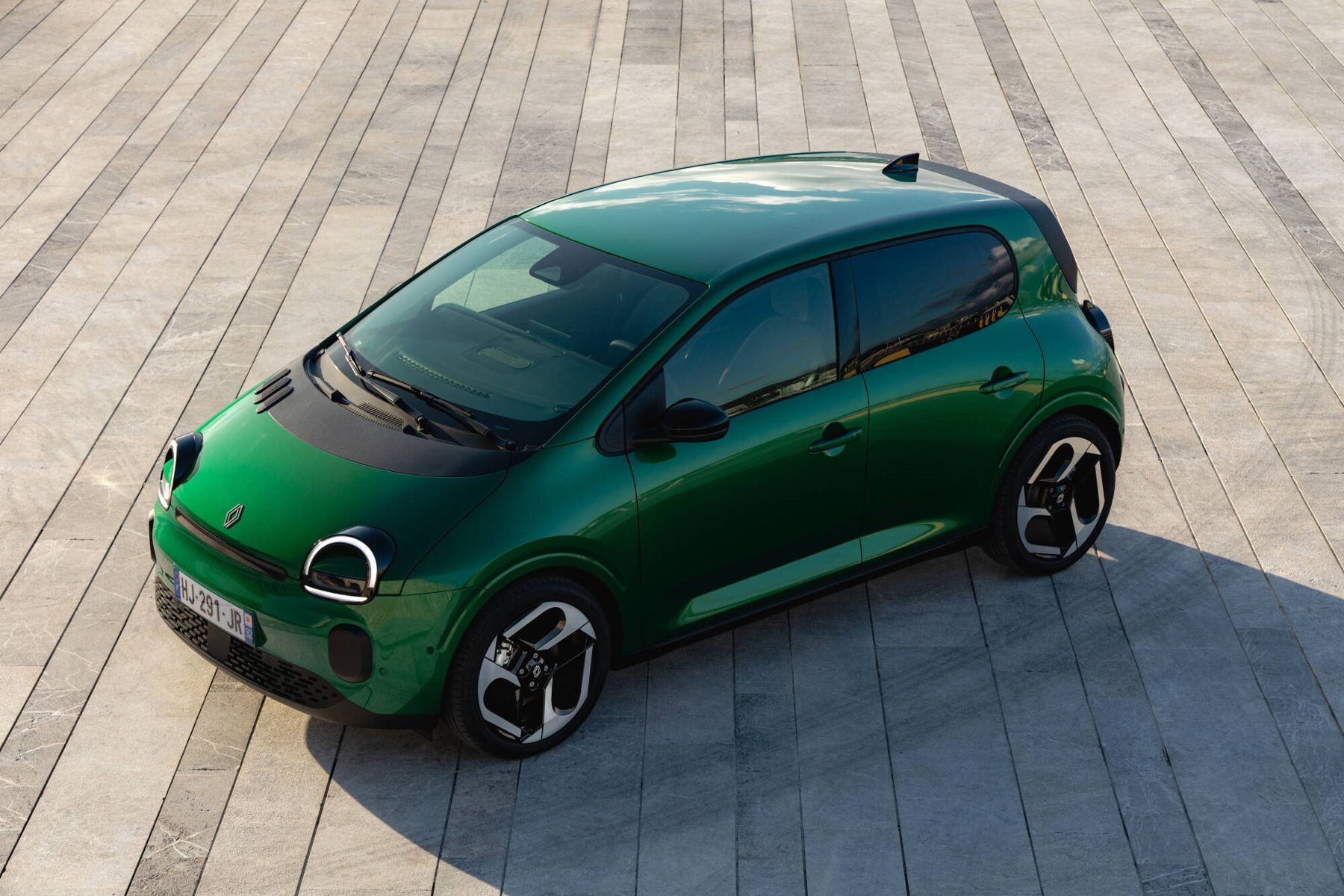
Under €20,000 for a new EV, a face that brings back memories for a whole generation, and far more technology than you might think.
First, it is the price that turns heads. Listed at €19,490, the Twingo drops to around €15,000 once the bonus is deducted for eligible households. At that price, there is little serious competition. Renault developed it in under two years, a company record.
With 82 hp and barely more than a tonne, the Twingo is not chasing performance: 12.1 seconds to reach 100 km/h, but 0 to 50 km/h in under 4 seconds, which is what really counts at traffic lights. Its very quick steering (2.6 turns lock to lock) and 9.87 m turning circle make it a true urban Swiss army knife. Top speed is capped at 130 km/h: the motorway is possible, but it is not its playground. Early feedback mentions fairly firm damping and seats that feel a little small on long trips.
Rated at 12.2 kWh/100 km, it is one of the most frugal cars on the market. In town and on quiet roads, it can drop below 11 kWh/100 km, less than €2 of electricity per 100 km at off-peak rates. The flip side: at 130 km/h, consumption climbs to 20 to 23 kWh/100 km, and the small battery then drains very quickly.
Every version gets two screens: 7 inches behind the wheel and 10 inches in the centre, with colourful animations unique to the Twingo. On the top trim, Renault's system has Google built in: Google Maps navigation that can find a free charger, a voice assistant and around a hundred apps, including video streaming to pass the time while charging. A small virtual avatar, Reno, uses conversational AI to answer questions about the car. On the entry version, you simply mirror your smartphone, which works very well.
We did not expect this much in such a small car: up to 24 driver aids depending on the version. Adaptive cruise control that can stop and restart in traffic jams, lane keeping, emergency braking that also watches junctions, a warning before you open your door on a cyclist, a 360° camera and parking assistance. A single button switches off the aids you find too chatty, and a camera monitors driver attention.
Hard plastics almost everywhere, as is often the case at this price, but the atmosphere is saved by touches of bright colour and screen graphics full of humour. The build feels solid and the essential controls remain physical.
It is only 3.79 m long but genuinely versatile: the rear bench slides and frees up to 16 cm of knee room in its rearmost position. Slid forward, it takes the boot to 360 litres. Four average-sized adults can travel without complaint on a short trip.
The trap to know about: fast charging is not standard. Without the pack costing about €500, you cannot plug into a motorway charger. With it, getting back to 80% takes just under half an hour, and the car can even power an electrical appliance. At home, one night is more than enough.
More photos
At around 4.20 to 4.30 m, this is the ideal size for a single family car: compact enough for town, big enough for holidays. Five models stand out this year-end. Here is how they compare.
Ranking based on official manufacturer data (price, range, charging, volumes). *MG4: price after the manufacturer's permanent €6,000 discount.
| Kia EV3 | VW ID.3 Neo | Renault Mégane | MG4 | Audi A2 | |
|---|---|---|---|---|---|
| Starting price | €36,490 | €34,990 | €37,500 | €27,490* | €38,600 |
| Power | 204 to 292 hp | 170 to 231 hp | 220 hp | 190 to 435 hp | 170 to 326 hp |
| Batteries | 58 or 81 kWh | 50, 58 or 79 kWh | 67 kWh LFP | 64 or 77 kWh | 52, 61 or 84 kWh |
| WLTP range | 436 to 605 km | 417 to 629 km | 501 km | 405 to 545 km | 423 to 646 km |
| Fast charging | 100 to 135 kW | 105 to 183 kW | 165 kW | 144 to 154 kW | 100 to 183 kW |
| Boot | 460 L + 25 L | 385 L | 440 L | 350 L | 396 L |
| Length | 4.30 m | 4.27 m | 4.20 m | 4.29 m | 4.32 m |
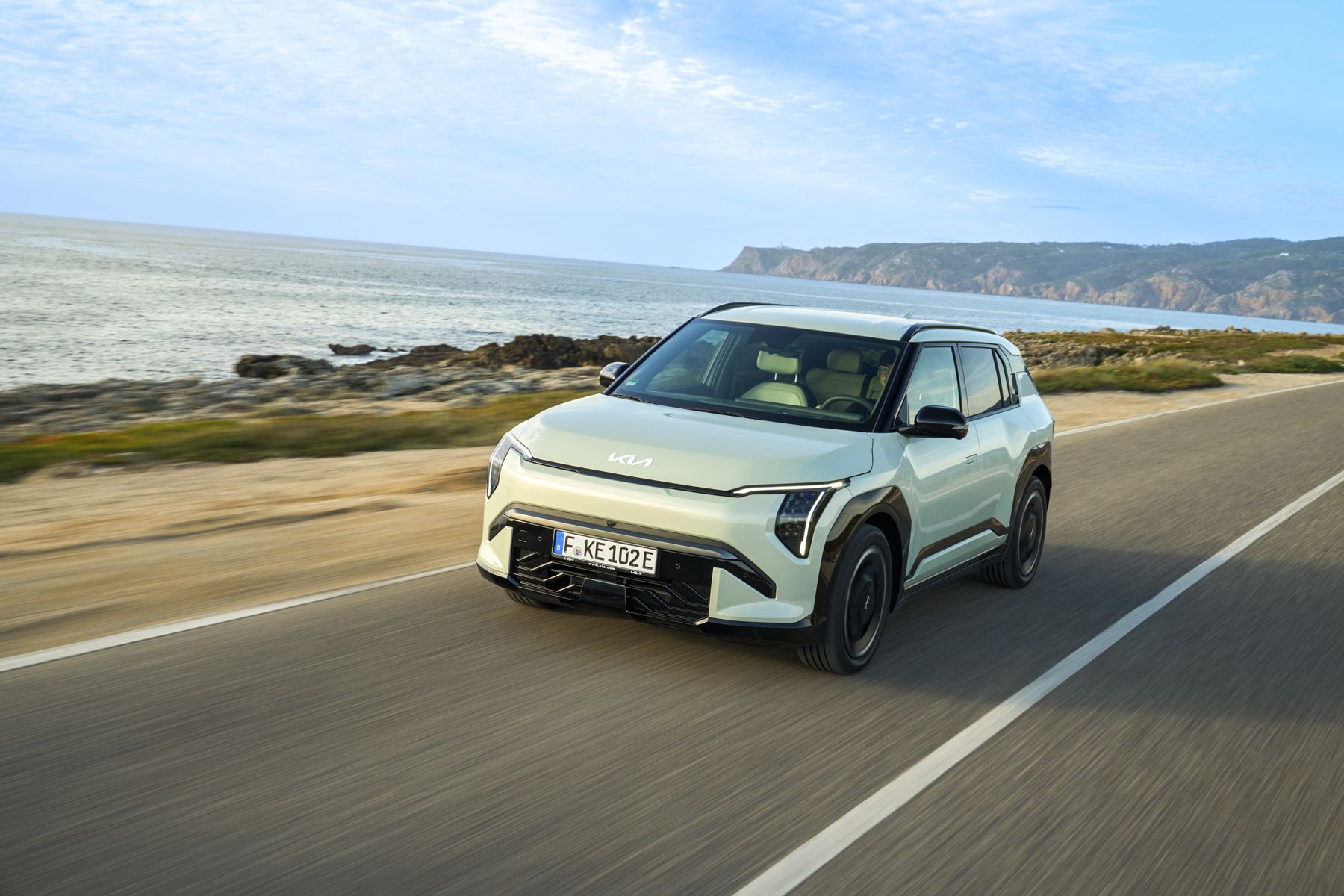
Technically a small SUV, the EV3 plays in the compact league at 4.30 m long. And it crushes the competition on two points that matter to families: up to 605 km of range with the big battery and a 460-litre boot, plus a front compartment for the cables. Equipment is generous from the entry level and official consumption stays reasonable, around 15 kWh/100 km.
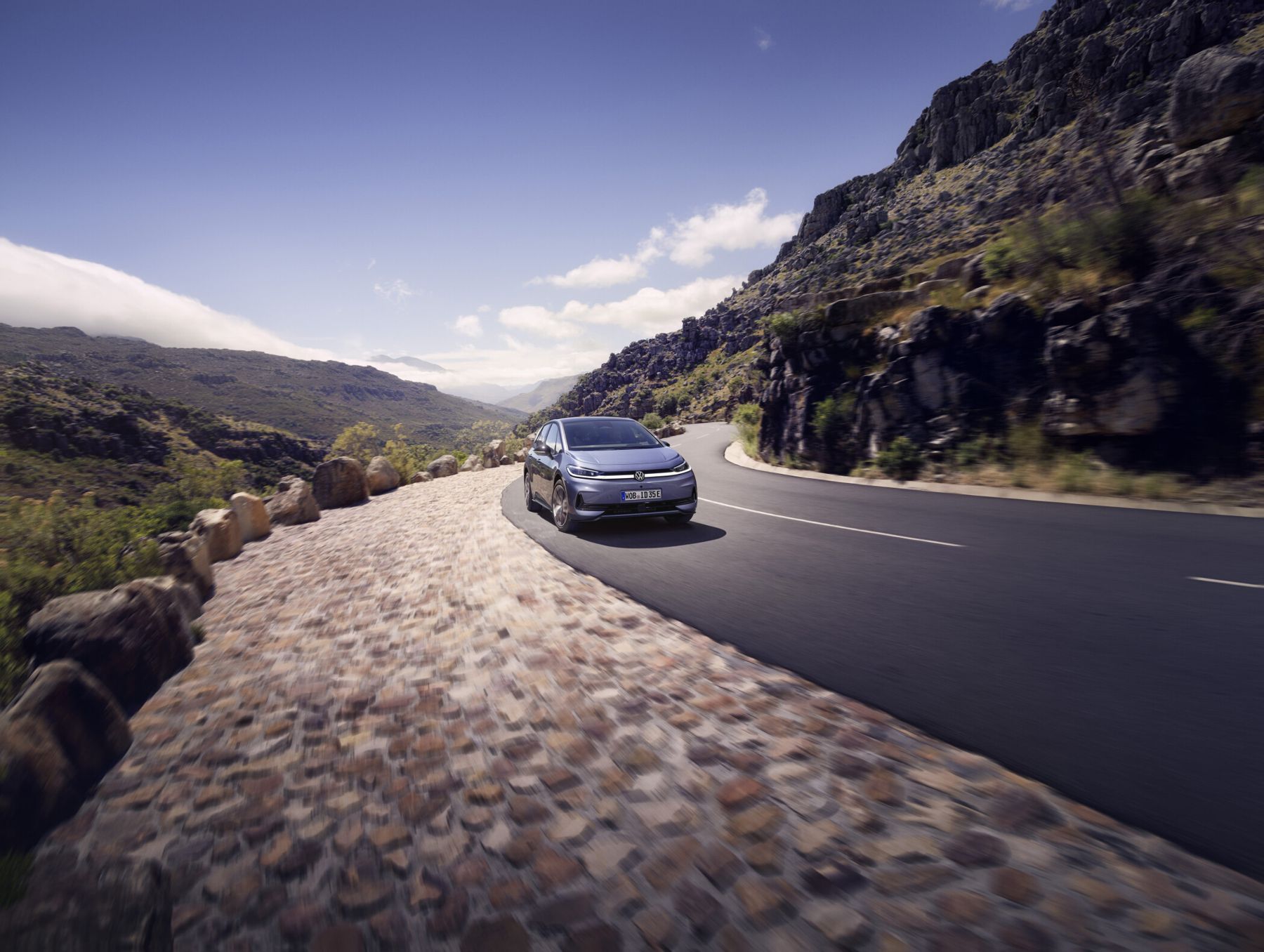
The third version of the ID.3 is finally the one we were waiting for. Volkswagen has fixed the interior (soft materials, real buttons) and adopted a more efficient motor. With the 79 kWh battery, range comes close to 630 km and charging rises to 183 kW. Rear-wheel drive, a long wheelbase and generous rear seats complete the picture. The only real drawback: the long-range version starts at €45,900.
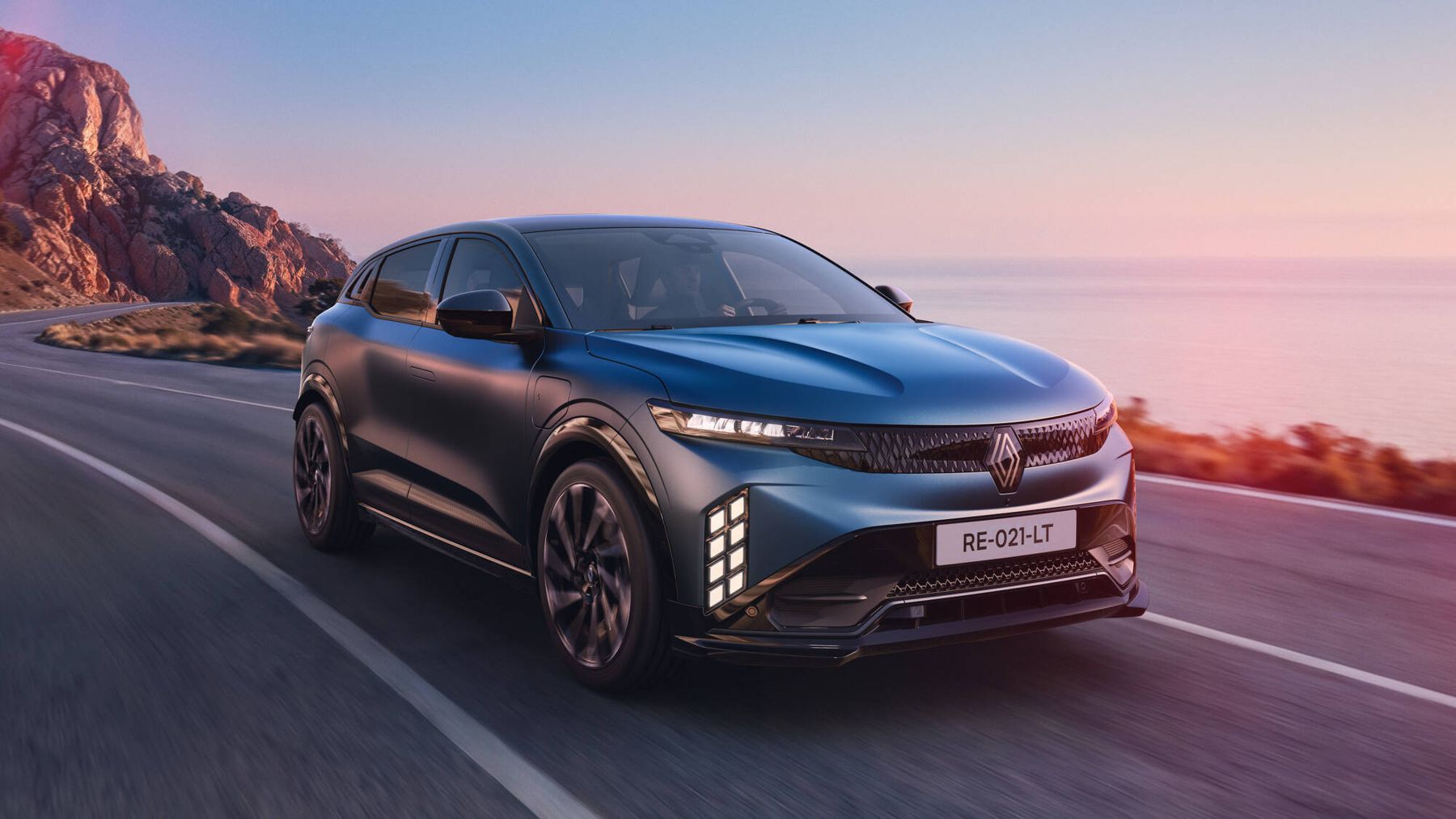
Facelifted this summer, the Mégane moves to a 67 kWh LFP battery that passes 500 km, charges at 165 kW and drops its price by €2,000. It keeps its big asset: an infotainment system with Google built in, among the most pleasant on the market. Short (4.20 m) but roomy, with a 440-litre boot, it can also give energy back to an appliance or the grid.
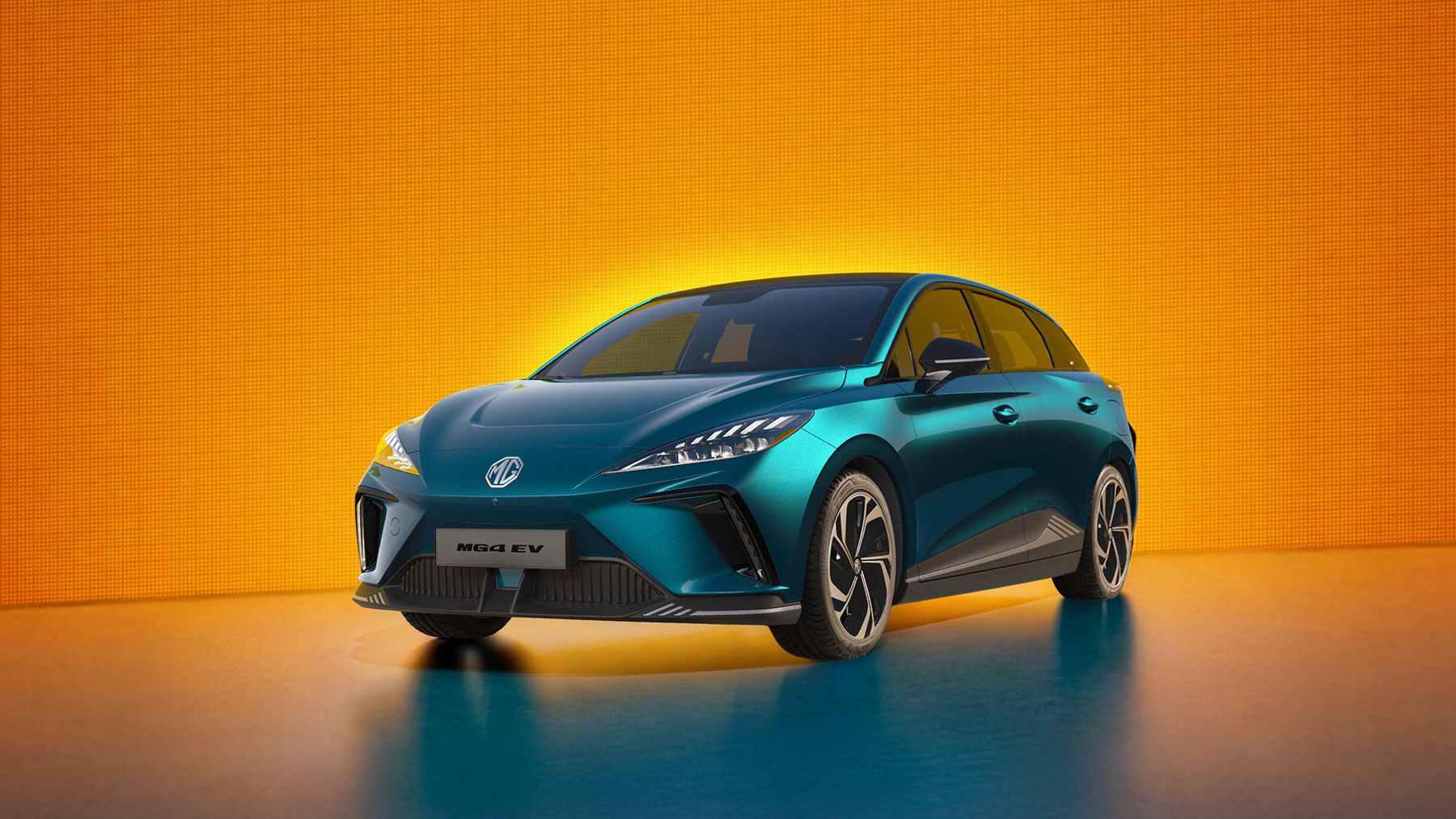
The MG4 has lost its crown as the low-price champion, but remains unbeatable on value for money. Thanks to a €6,000 discount on the 64 kWh version, it costs €27,490, with 452 km of range and 10 to 80% charging in 25 minutes. The dashboard has been completely redesigned and the single trim level is very well equipped. The 77 kWh version reaches 545 km, but charges noticeably more slowly.
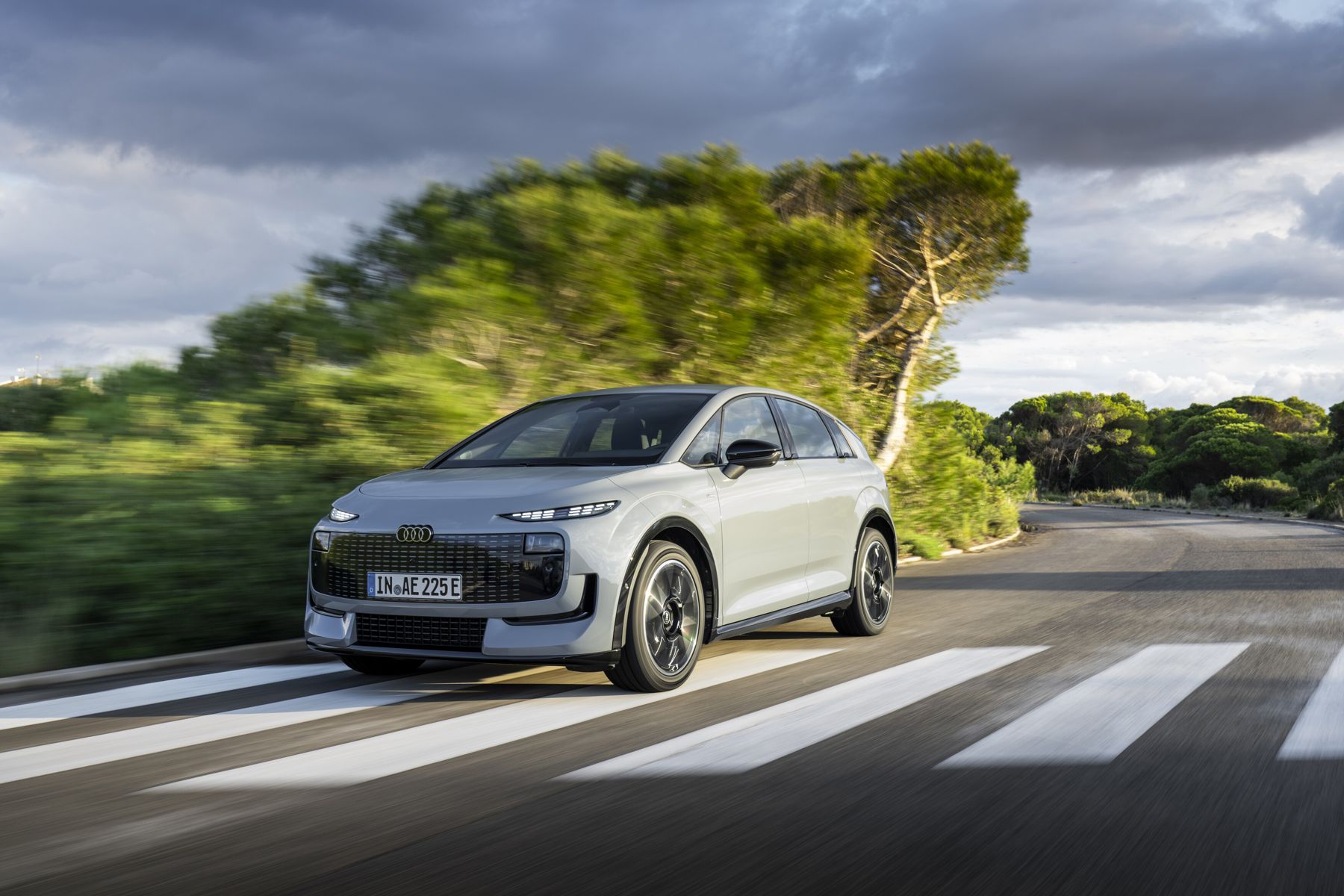
The latest arrival, the A2 e-tron bets everything on efficiency: a drag coefficient of 0.24, official consumption from 12.8 kWh/100 km and up to 646 km of range. It shares its base with the ID.3 Neo, but with a more refined presentation, a large curved display and clever magnetic storage. It closes this ranking for one reason only: first deliveries will not happen until December, and the desirable versions quickly pass €45,000.
No combustion engine, no gearbox, far fewer moving parts. Energy follows a simple chain, from the plug to the wheels.
Alternating current (AC) from the grid arrives through the cable, at home or at a charging point.
It converts AC into direct current (DC). On a fast charger, this conversion happens inside the charger.
Thousands of lithium cells store the energy, measured in kWh. 50 to 80 kWh on a typical compact car.
It turns DC back into AC to drive the motor precisely, to the thousandth of a second.
Instant torque, efficiency close to 90%. When braking, it becomes a generator and recharges the battery.
The battery accounts for a large share of the car's price. The chemistry determines range, lifespan, cost and charging speed.
| Chemistry | Status | Strengths | Limits | Found in |
|---|---|---|---|---|
| NMC (nickel-manganese-cobalt) | Common | High density, long range | More expensive, depends on cobalt and nickel | Premium models and long-range versions |
| LFP (lithium-iron-phosphate) | Common | Cheaper, very durable, happy to charge to 100% | Heavier, less comfortable in very cold weather | City cars and entry-level versions |
| Sodium-ion | Emerging | No lithium or cobalt, good in the cold | Density still low, reduced range | First small cars, mainly in China |
| Solid-state (solid electrolyte) | In development | Promises more range, safety and fast charging | Mass production not yet mastered, cost | Prototypes and announced small series |
The vast majority of charging happens at home or at work. Fast chargers are mainly used on long trips.
Emergency use only. About 15 km added per hour.
The ideal solution: a full battery overnight, at off-peak rates.
Car parks, shops, streets. Handy while shopping or at the office.
Motorways and main roads. From 10 to 80% in 20 to 40 minutes depending on the car.
Rough estimates: 10% charging losses included, petrol at €1.85/L. On fast chargers, real power drops beyond 50 to 60% charge, hence the calculation up to 80%.
An electric car is also a computer on wheels. Here are the technologies worth knowing, already here or on their way.
Doubling the voltage reduces current and heat. The result: shorter fast-charging stops and lighter cables.
The car becomes a mobile battery: powering an appliance (V2L), a house, or feeding power back to the grid at peak times (V2G).
It heats the cabin using three times less energy than a resistive heater. A real range gain in winter.
Like a smartphone, the car receives updates over the mobile network: new features, better battery management, fixes.
Plug in, the charger recognises the car and bills automatically. No more cards and multiple apps.
Radars, cameras and software provide adaptive cruise control, lane keeping and emergency braking. The driver remains responsible.
Since 1 July 2025, France's eco-bonus has been replaced by the "coup de pouce" incentive for electric private vehicles, funded by energy suppliers through energy-saving certificates (CEE).
Depending on household income, for a new car eligible under the eco-score. The discount is deducted directly by the dealer.
An extra bonus for models fitted with a battery made in Europe.
Since 1 September 2026, a CEE incentive also supports buying or leasing a used electric car, with no income conditions.
Amounts vary by brand, as each works with its own funding partner. Always check the exact offer with the seller before signing.
The average French driver covers less than 40 km a day. A recent EV offers 300 to 600 km of range: most drivers only charge once or twice a week.
False. Manufacturers usually guarantee the battery for 8 years or 160,000 km with at least 70% capacity. In practice, degradation often stays moderate well beyond that.
France passed 200,000 public charging points in July 2026, including more than 5,000 at 350 kW or more. Availability can still improve (89% of points operational in July 2026).
They can: more than 90% of the lithium, nickel and cobalt can be recovered with current industrial processes. Before that, many get a second life in stationary storage.
Building one emits more CO₂, mainly because of the battery. But in France, with very low-carbon electricity, that debt is repaid within a few years of use, and then the advantage keeps growing.

Fans have waited years. The first iPhone that opens like a notebook reached stores on 23 October, and it does not go unnoticed.
Closed, it is a compact iPhone with a 5.4-inch screen. Open, you get a 7.6-inch mini tablet that you can even scribble on with the Apple Pencil, a first. The crease in the middle is very discreet, and the whole device stays water-resistant.
To get there, Apple made some bold cuts. No face recognition: you unlock with your finger on the side button. No powerful optical zoom either, just two 48 MP camera sensors. A physical SIM card? Forget it. A clever little touch: the outer screen shows the framing to the person you are photographing.
It shares the chip of the iPhone 18 Pro and debuts a new in-house modem, faster and less power-hungry. Each half of the phone hides its own battery. With iOS 27, you can display two apps side by side, as on an iPad. Storage ranges from 256 GB to 2 TB, and MagSafe wireless charging is kept. A well-thought-out feature for group photos: the phone takes the shot by itself when everyone is ready.
More photos
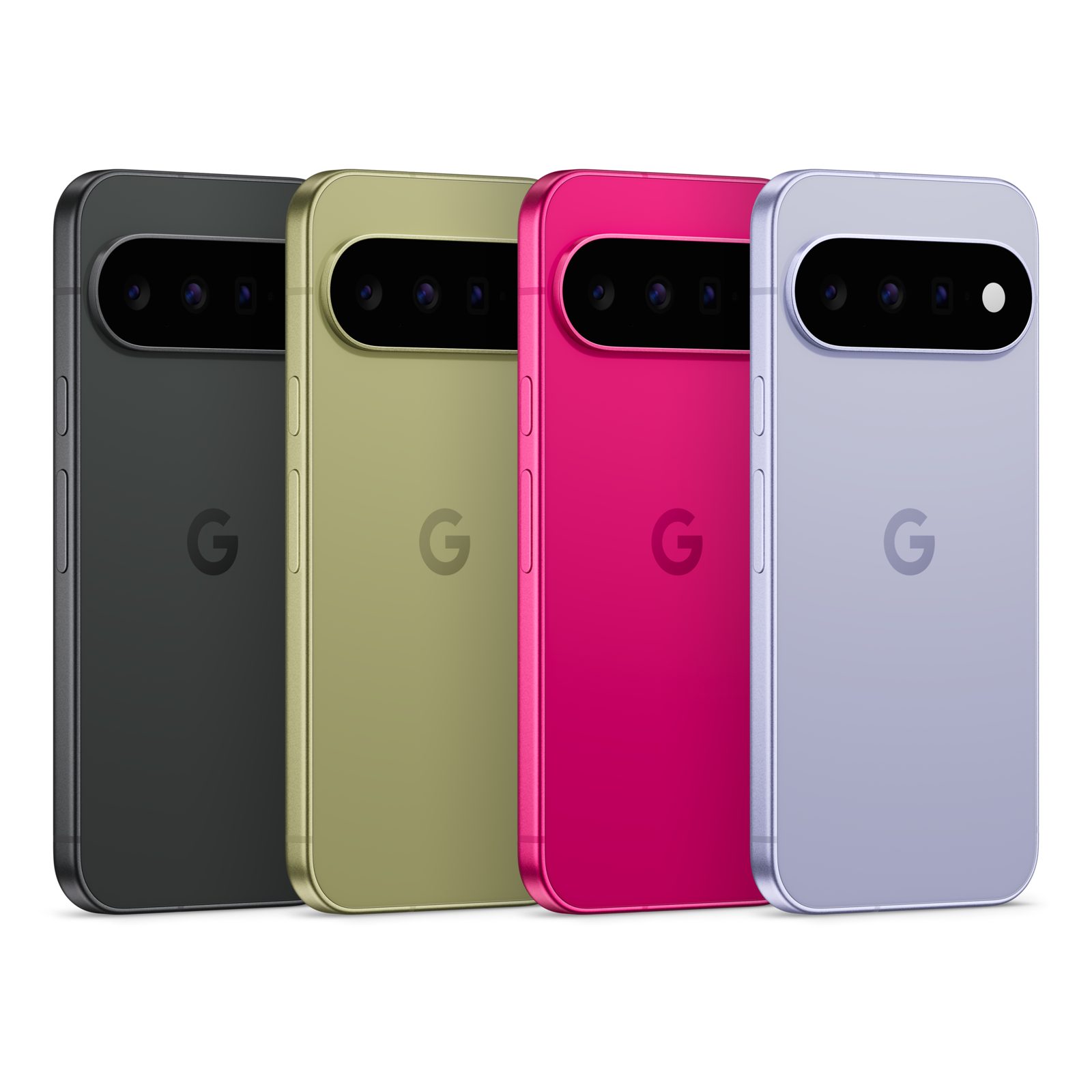
Four models, a new in-house chip and plenty of artificial intelligence: Google's 2026 line-up bets everything on the camera.
The main sensor has grown and lets in much more light, ready to shine in dimly lit evenings. The Pro versions add a 5x zoom and can film in 8K. On the assistant side, Gemini translates a video or voice message live and turns hesitant dictation into clean text.
Good news: every model starts with 256 GB, no more phones that fill up quickly. Less good news: the bill rises by about a hundred euros compared with last year, with €999 for the base model.
A new built-in search finds anything on the phone, a photo, a message, a setting, when you describe it in your own words. The Pro models get a very bright screen that stays readable even in full sunlight. Wi-Fi 7 and the latest magnetic wireless charging are on board, and every model resists water and dust. The Pros even get a small light on the back to signal notifications without turning on the screen.
More photos

New sensors on the back, a new Health app and finally more comfortable battery life: Apple's watch increasingly sees itself as a pocket doctor.
Every morning, the watch gives you a kind of fitness score: are you ready to push yourself, or should you take it easy? And the score changes over the day. More surprising, a double press on the crown shows in writing what was just said around you over the last few seconds. Handy when you missed something, a little unsettling too.
Good news for those who forgot to charge it: it now lasts a full day, and a quarter of an hour on its dock gives back about twelve hours.
A new chip makes the watch faster and smarter. The completely redesigned Health app even calculates a kind of "health age" from your sleep, resting heart rate and fitness. The feature that summarises conversations picked up around you remains optional and can be limited to certain places. Two sizes, 42 and 46 mm, and three materials: aluminium, titanium and ceramic. For extreme athletes, the Ultra version starts at €899.
More photos
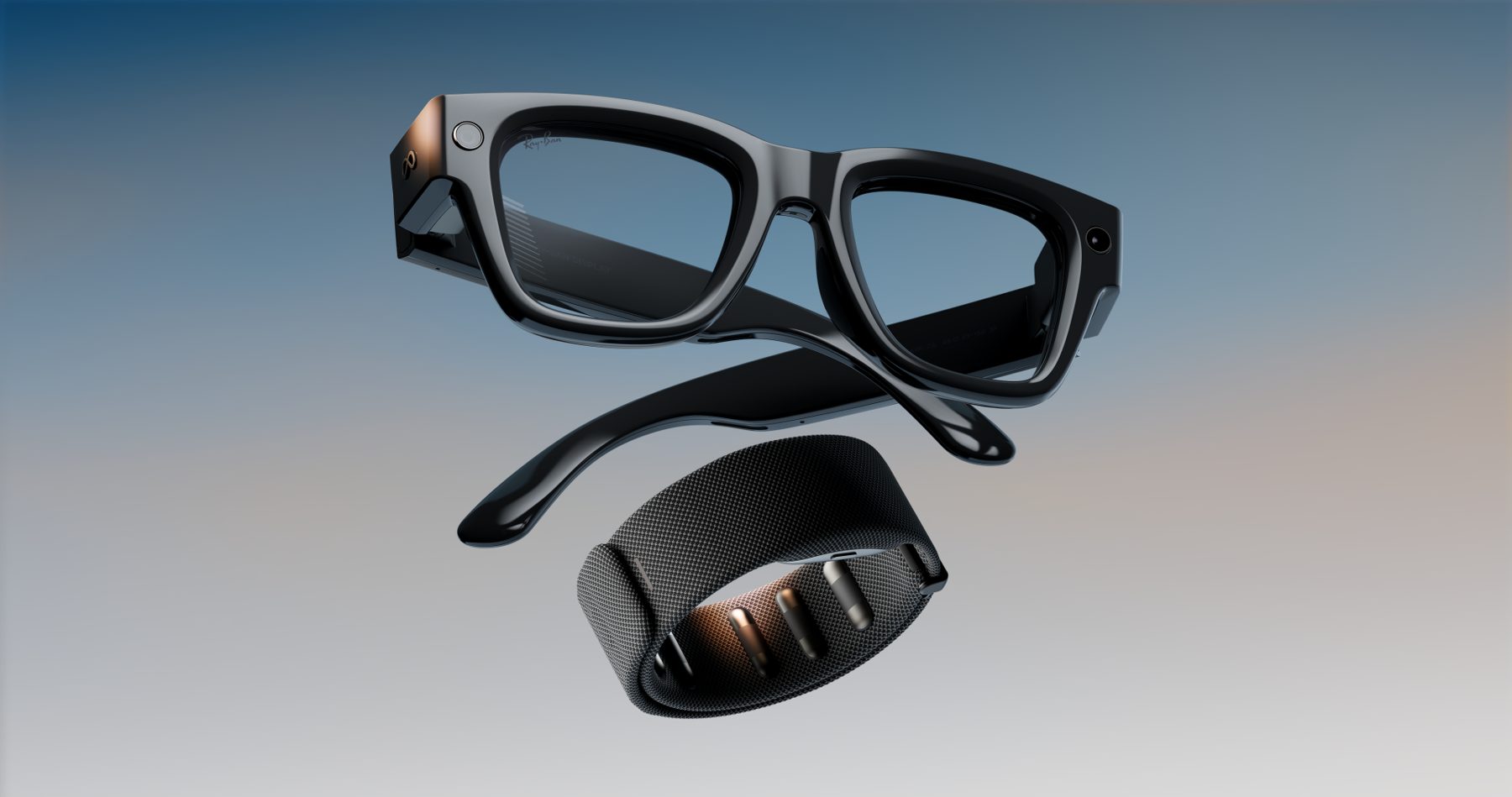
Read your messages without taking out your phone, follow directions without looking down: since mid-October, it is possible in France, with a pair of glasses.
A small colour screen appears through one of the lenses. To control it, there are no buttons: a wristband reads your finger movements, a pinch to confirm, a swipe to scroll. Amazing to describe; we will see how it works in practice. Not all the features shown in the United States are switched on here yet.
For those uncomfortable with the camera, a new audio-only version without a lens arrives. Proof that the market is really taking off: these glasses now sell by the millions.
The classic third-generation Ray-Ban Meta keeps the camera, microphones and speakers, without a screen, for €449. The new Ray-Ban Audio, at €349, sticks to sound: music, calls and voice assistant, with no lens at all. Meta promises more than a hundred different frames by the end of the year, across Ray-Ban, Oakley and its own designs.

Got an Android phone and eyeing the Apple Watch? Here is Google's alternative, also designed for sport and health.
Two sizes, 41 and 45 mm, for small and large wrists, and a round design that contrasts with Apple's square. Google presents it as its most polished watch for tracking activity and sleep. Price-wise, it starts just below its rival.
For Android phone users who want to track their workouts, sleep and heart rate without changing ecosystem. It pairs naturally with a Pixel, but works with most Android smartphones. Allow €30 more for the large model.
Unlock your car, warm it up before leaving, schedule charging: the smartphone becomes the remote control of the electric car.
The little winter-morning ritual is changing. From the kitchen, you start the heating while the car is still plugged in: you set off in a warm cabin without eating into the range. In the evening, you schedule charging to take advantage of off-peak rates. More and more models, like the ID. Polo as an option, even leave the key in the drawer: the phone is enough.
The car recognises the phone from a few metres away using Bluetooth or a very precise location chip. On some models, such as the Kia EV2, the key goes straight into the digital wallet of an iPhone or Android smartphone, next to your bank card. You can even lend your car remotely by sending a temporary key to a friend or relative.

Imagine a picture more than seven metres wide on your wall. That is what this projector offers, reserved for large spaces… and large budgets.
The XR10 is clearly aimed at home cinema enthusiasts. Its lens has around fifteen glass elements, and it handles the picture formats of the best streaming films. You still need the wall and the room to go with it: this is a device costing almost €6,000.
A triple-laser light source, a latest-generation display chip able to switch its micro-mirrors thousands of times per second, and a very wide colour palette. It supports Dolby Vision and IMAX Enhanced, found on many streaming films. Unveiled at the Las Vegas show in January, it arrived in France this summer.
A screen several metres wide, smooth enough for the fastest games: that is the promise of XGIMI's new range.
The big new feature: these projectors display 4K at 120 frames per second, the pace recent consoles demand. Controller in hand, movement stays sharp, with no smearing. In terms of light, the most powerful one can be used without plunging the room into total darkness.
Nothing complicated to set up: you put it down, aim it with its swivelling stand, and the picture lines itself up. A detail parents will appreciate: the beam switches off if someone walks in front of it.
Three models share the bill, from the most affordable to the brightest. All offer Harman Kardon sound, the Google TV interface with streaming apps, and a picture from 40 to 300 inches. Depending on the model, an optical zoom and lens shift let you install it without being straight in front of the screen. In France, the mid-range model costs around €2,800.
Known for sensible projectors, BenQ shifts up a gear with two more ambitious models, designed for the living room and for film lovers.
The first targets gamers: its response time is so short you forget you are playing on a projector, and it can be controlled along with the rest of the smart home. The second focuses on colour for film fans, with a motorised lens you adjust from the sofa. French prices have not yet been announced.
The TK715i, for the living room, relies on the Google TV interface, a bright 4K picture and a display lag of just a few milliseconds. The W4200, for home cinemas, focuses on colour accuracy and supports the latest HDR formats. Both have an artificial intelligence chip that adjusts the picture and helps with installation.
TechnWatt is a news website published on a non-commercial basis by Alexandre Guyonnaud. Publication director: Alexandre Guyonnaud. Contact: guyonnaud.alexandre@gmail.com.
Netlify, Inc., San Francisco, California, United States · netlify.com
The texts belong to TechnWatt. Photos remain the property of the brands named in the credits and come from their press areas.
TechnWatt requires no account or sign-up and collects no personal data. The site may show ads provided by Google AdSense. Google and its partners may then use cookies to serve and measure these ads and, with your consent, to personalise them. You are asked for your choice on your first visit and can change it at any time through the “Cookie settings” link at the bottom of the page. Learn more: policies.google.com/technologies/ads.
You have the right to access, correct and erase data about you by writing to guyonnaud.alexandre@gmail.com, and to lodge a complaint with the CNIL, the French data protection authority (cnil.fr).
A green disc with a lightning bolt, and the name as one word: the green "n" reads as "and". Tech and Watt, technology and energy.

On white or light backgrounds.

The name turns white, the "n" bright green.

Favicon, profile picture, app.


For print or on a photo.
#30D158#0A7D3B#1D1D1F#F5F5F7Inter
A single typeface for the whole site and the logo, close to Apple's: SemiBold for headings and the name, Regular for body text, and SemiBold for the "n" too, simply in green.